How to Launch a Shoe Brand Without Molds or Minimums
For founders and creators who want to make a physical product without tooling, inventory or minimum order quantities.
About Ben Weiss
Ben Weiss is the founder and CEO of Syntilay, the footwear company that sells what it bills as the world's first commercially available AI-designed, 3D-printed, custom-fit shoes, made to order from a smartphone foot scan with no molds, no assembly and no stitching. He is known for removing the tooling economics that kept creators and non-basketball athletes out of footwear entirely, a mold running $2,000 to $4,000 per shoe size with a thousand-pair minimum behind it. His advisory bench includes Reebok co-founder Joe Foster and original Shark Tank investor Kevin Harrington, Shaquille O'Neal is a customer at thirty custom pairs, and he launched the TO Reset custom pickleball recovery shoe with Pro Football Hall of Famer Terrell Owens. Syntilay has been covered by Fox Business, Bloomberg, Entrepreneur and Sports Business Journal.
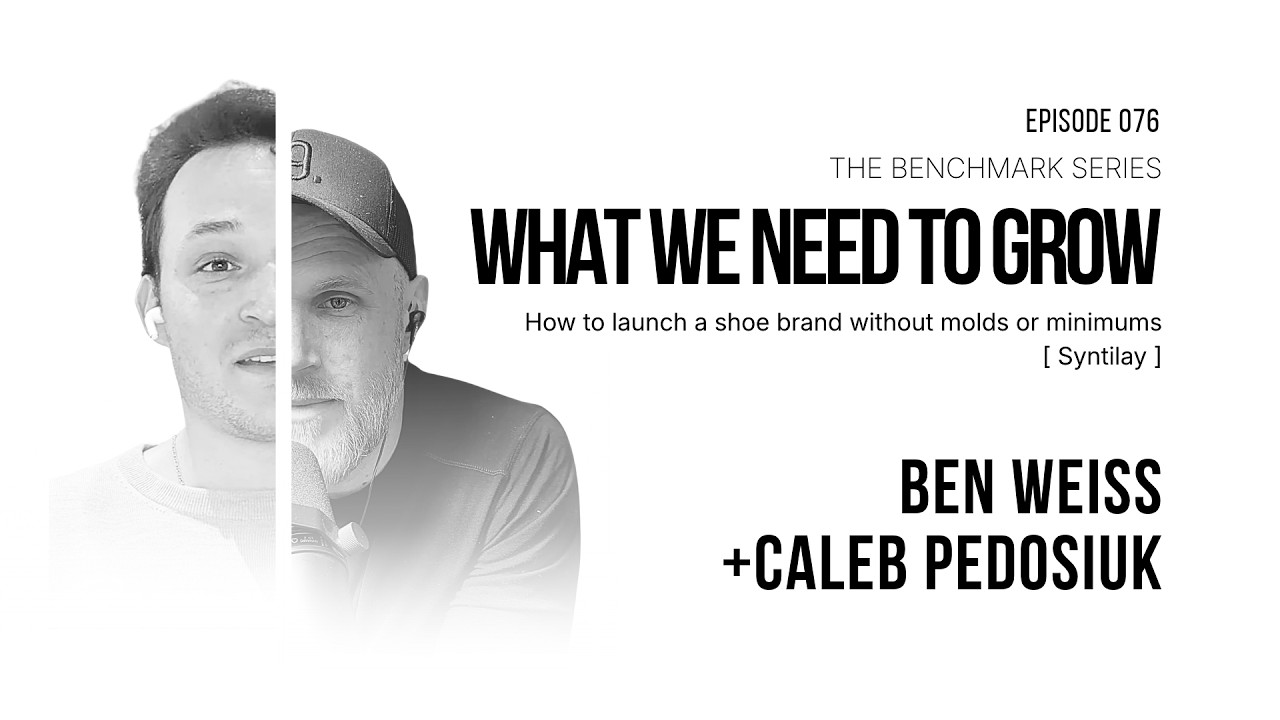
KEY TAKEAWAYS
- The mold is the gatekeeper, not the design. Ben puts hard numbers on why creators have never had a shoe. "Molds are $2,000 to $4,000 a mold per shoe size. Every shoe size, you got to make a mold every half size. That adds up. Every mold you open up is 1,000 pairs at $30 a pair as a minimum order quantity. You're sitting on 20,000 pairs to try anything." That is the real barrier, and it has nothing to do with whether anyone would buy the shoe. Syntilay's answer is to delete the tooling rather than finance it: "we can 3D print without molds. We have no assembly, no stitching, no gluing, and we just print on demand when somebody orders."
- The creator market is open because nobody is fighting for it. His read on where to compete is unsentimental. Basketball athletes are "just a bidding race where Nike's got the most amount of money, so they wind up winning," and "nobody's dethroned Nike in like 30 years." Creators are the opposite. "The creator world is entirely different. We're the only player in the creator world right now." He makes the same point as a question that is hard to argue with: "Many of those people you mentioned, Caleb, may have hats, may have shirts, may have shorts and hoodies. Why are shoes any different?"
- Nobody wants a printed shoe. They want a shoe that fits. This is the sharpest thing in the episode, and it is a positioning lesson that generalizes well past footwear. "The way that you sell the printed shoe is not, hey, do you want a printed shoe? It's, would you like a better fit experience of custom instead of just a size 11, 12, 10 that is just generic and average when your feet are different from each other and different from everybody else and there's thousands of data points on your feet." The printing is how it is possible, not why anyone buys. He is explicit that the technology on its own has failed to earn attention: "why are you not wearing a pair of printed shoes today, Caleb? Because the value add has not been brought to the average customer."
- Recovery by Sport is a distribution strategy wearing a product's clothes. Rather than chase signature shoes for the athletes everyone else is bidding on, Syntilay builds sport-specific recovery shoes with elite athletes, which gives an athlete a shoe story they could not otherwise have. "So instead of a football athlete never getting a shoe deal because you can't wear a cleat casually, if we can give you a football-specific recovery shoe that is a football story that you can now bring to your audience." The Terrell Owens pickleball shoe is that thesis shipped.
FULL TRANSCRIPT
What We Need to Grow, Episode 076: Why Are Shoes Any Different. A Founder Talk conversation with Ben Weiss, Founder and CEO of Syntilay. Cleaned for readability; the words are the speakers' own.
Caleb Pedosiuk: All right, Ben, you are disrupting a very old industry with shoes, 3D printing. You're dealing with stuff out there in space. You're dealing with things, I mean, you've got advisors that are up there at the Reebok level, at the Shark Tank level. By all means, please introduce what you're working on and tell us a little bit about what's going on.
Ben Weiss: Thanks for having me, Caleb. I appreciate it. What we're doing is we're trying to get rid of the shoe size. We 3D print shoes and they're custom made to your feet from foot scans. And we're giving athletes, content creators, brands a chance to make their own designs from scratch and never could make them before.
And I've got a great set of advisors around me. The founder of Reebok, who's one of two people alive today that took a brand from an idea to the best-selling shoe company in the world. One of the sharks from Shark Tank, Kevin Harrington, who was most notably behind the Celsius drink with the influencer marketing. They couldn't compete with the athlete marketing, so they went with their own route and did really well off that. I think it's like a $15 billion company. And we're working to scale this idea of giving everybody the ability to get custom shoes through a scan through their phone camera, or retail through a foot scanner.
Caleb: Very cool. You know, it's interesting to me that what seemed obvious now with Michael Jordan having his own pair of shoes was not obvious at the time. And how when you're pioneering something new, like with what you're doing, to some people it might seem odd to be able to personalize shoes in such a way, and yet here we are.
Ben: Yeah, I think it's super important to really be a first mover when it comes to new ideas in footwear. I think there's a lot of tried and true processes that have been there for a long time. And like you mentioned, when it came to creating the first Jordan silhouette, nobody ever made a shoe around a player like that. It was around a sport. And we've seen the potential of signature shoes for many athletes and how they can become the biggest licensed product categories that ever bear their names.
And what we want to do is give that opportunity to more people. Why can't YouTube, TikTok, Twitch stars do that? Why can't athletes in other verticals besides basketball do that? And so we've been building a category called Recovery by Sport, where we have top athletes develop better recovery shoes based on how you move in your sport, for wear before or after. So instead of a football athlete never getting a shoe deal because you can't wear a cleat casually, if we can give you a football-specific recovery shoe that is a football story that you can now bring to your audience. So we're really experimenting with new stories that connect people to their favorite athletes, to their favorite creators in a different way. And right now it's early.
Caleb: The recovery, yeah. I think I saw, I believe it was an NFL player who had a pickleball recovery shoe. I think one of the stories that was on your site, and I thought that was so interesting because like you said, it gives different people a way to connect. And I mean, brands, the whole idea behind a brand is that it's what is that feeling that it evokes in you?
You know, I was talking with Beyoncé's dad a couple episodes back, and he was talking a bit about brand and how back even then when Destiny's Child and Beyoncé were starting, so many in the music industry were just selling tickets, and he was there talking with McDonald's and L'Oréal and others understanding the importance of building brand.
Ben: Brand is critical to success with any business. You need to have a name and a symbol that means something, that stands for something. And you've got to convey that to customers. But it's all based on what makes the brand, which is the innovation, the product, and the way that that's conveyed to people. But it comes from a great product.
So what we're doing now at Syntilay is we're mastering a great product. We're building custom 3D-printed shoes for all different types of foot shapes. We have Shaquille O'Neal as a customer. Shaq's my second biggest customer today, bought 30 pairs from us, all custom made to him. They texted me, I don't know what you did to my feet, but I don't want to take them off. I want 100 more pairs in the machine. And if we're able to custom make it for Shaq, in Shaq's size, which he's usually a 22, but now these are Shaq-sized custom, we could definitely do it for anyone.
And so it's just about building a great product and then expanding out there with the brand that people recognize and know. And it comes from that innovation and also more athletes, more creators, more other brands not in the footwear space that buy into it. It definitely helps us a lot.
Caleb: So at the stage that you're at right now, you've got some great advisors around you, you've got some initial capital, you guys have a working model, it seems like you have product-market fit. Who is it right now that you're wanting to really get a hold of what you're saying, connect with you? Would it be influencers on the sports side, on the personality side? Anyone who's building brand, like should Alex Hormozi have a pair of Recovery shoes? Should Leila Hormozi? You know, is this something where you see basically anyone with an audience and an interest in doing something innovative potentially reaching out?
Ben: 100%. I think that footwear is really an untapped space. Many of those people you mentioned, Caleb, may have hats, may have shirts, may have shorts and hoodies. Why are shoes any different? The issue has been that it's too difficult to create them. So that's why we built a new approach to it.
We started using generative AI to make shoes. We were able to make a shoe faster than you could ever make a shoe before. We use 3D printing. We got rid of molds. Molds are $2,000 to $4,000 a mold per shoe size. Every shoe size, you got to make a mold every half size. That adds up. Every mold you open up is 1,000 pairs at $30 a pair as a minimum order quantity. You're sitting on 20,000 pairs to try anything. The average creator, it's maybe too much of a risk.
With our approach, we can 3D print without molds. We have no assembly, no stitching, no gluing, and we just print on demand when somebody orders. So we've taken away the biggest issues in footwear and we're now making it actually accessible to people to even try. Which I think this space is going to look so different as we do this, because there are so many creative people out there with audiences today. I mean, the amount of content creators is far more than the amount of professional sports athletes in all major sporting leagues in the world, and they're so unique. Their brands are so different. You got YouTube families, Twitch streamers in this vertical, TikTok personalities in fashion, TikTok in dance. What if a lot of these people could sell shoes? We're backing a lot of them to find out.
Caleb: So right now, influencers with their own audience would be your primary audience that you're speaking to.
Ben: It's a key focus. It's definitely a key focus because nobody's giving them a chance. So there is the people that everyone fights over, the basketball athletes. It's just a bidding race where Nike's got the most amount of money, so they wind up winning. And nobody's dethroned Nike in like 30 years, something like that, around 30 years. The creator world is entirely different. We're the only player in the creator world right now.
Caleb: Yeah, I'm thinking about gaming, you know, a lot of people that are these kind of household names that are all super niche with some of this stuff. In terms of production, is it decentralized? Do you have different spots, because you deal with 3D printers, or is it centralized in one primary area right now?
Ben: Our approach, Caleb, is that we don't feel we need to reinvent the printed shoe. I think the printed shoe is a great product. There's two major printing approaches we use. We use FDM, where it's layer by layer by layer, but industrial printers designed for shoes. We use a resin DLP/SLA printing approach, where it's a vat of liquid and it gets lasered out of it. And both approaches, you can make great products, great shoes.
The issue is, why are you not wearing a pair of printed shoes today, Caleb? Because the value add has not been brought to the average customer. The average customer doesn't have a clear value add from the printed shoe. The way that you sell the printed shoe is not, hey, do you want a printed shoe? It's, would you like a better fit experience of custom instead of just a size 11, 12, 10 that is just generic and average when your feet are different from each other and different from everybody else and there's thousands of data points on your feet. That's what we're doing. And it happens to be the only way to make an affordable custom printed shoe, or an accessible custom shoe.
Actually, I should say the only way to make an accessible custom shoe is through 3D printing, and that's what we're building: connecting the printing to the scanning, building all in between and making it realistic, and the visibility around that.
Caleb: Okay, what would be the best way for people to track and follow along with what it is you're working on?
Ben: Syntilay.com, our website. S-Y-N-T-I-L-A-Y dot com. We post blogs as well and different evergreen content pages on a lot of our work. And then we have different stories. So like you mentioned, the football player, we launched a pickleball recovery shoe with NFL Hall of Fame athlete Terrell Owens, around how you move in pickleball, reducing the impact of lateral motion, like the side-to-side movement that you experience in the sport. It builds a unit in the heel that takes a lot of the pressure off the heel, and a grip structure that disperses energy.
And we're now doing that in almost every single sport with lots of different elite athletes. And those will just keep coming out on our website. So our website's definitely a great place, but there's also these stories that come out on the news. Like we did Fox Business and Bloomberg and Sports Business Journal and lots of other wonderful places that we're fortunate to have cover us around these stories. And we've got another one coming up in two weeks or so that we're putting out.
Caleb: Very cool. Well, Ben, thank you. I know it sounds like it's pretty busy right now. You got a lot going on, a lot of exciting things. I appreciate you taking a minute to share a little bit more. Thank you so much.
Ben: Thanks for having me, Caleb.
What We Need to Grow is a conversation series by 79 Development, hosted by Caleb Pedosiuk. New episodes on YouTube and Spotify.