How to Sell a Business Without an Investment Bank
For founder-led business owners thinking about an exit and wondering what an advisor should actually cost, for searchers and independent sponsors on the buy side, and for anyone trying to work out where quality of earnings work sits in a deal.
LinkedInO'Connell Advisory Group
About Patrick O'Connell
Patrick O'Connell is the founder and managing director of O'Connell Advisory Group, a transaction CPA firm in Arlington, Virginia providing quality of earnings analysis and financial due diligence to buyers and sellers in the lower middle market. He is a CPA licensed through the Virginia Board of Accountancy, and he built the practice after a career inside traditional transaction advisory firms, the last of them a top ten US CPA firm. His firm positions itself deliberately between a business broker and an investment bank, pricing a fixed preliminary analysis plus a smaller closing fee for founder-led businesses doing $1 to $15 million in top-line revenue, and it has grown entirely on referral with no paid acquisition.
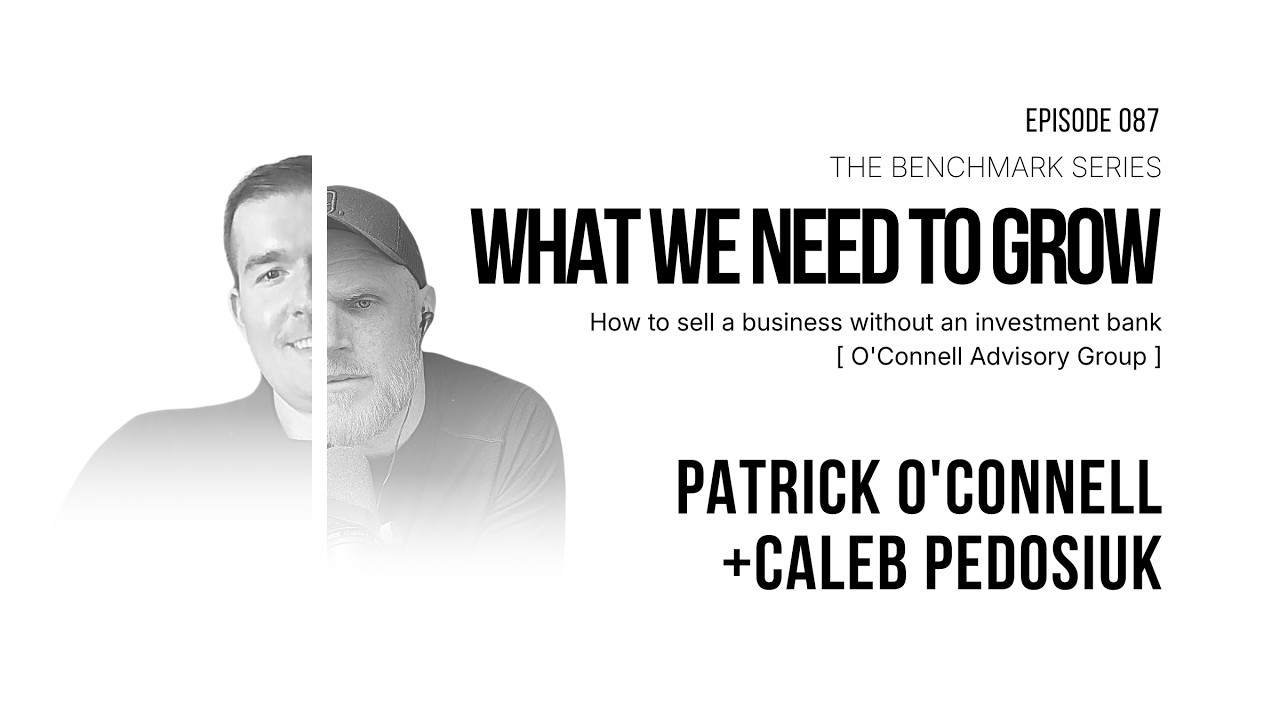
Patrick O'Connell is the founder and managing director of O'Connell Advisory Group, a transaction CPA firm that does quality of earnings work for buyers and sellers in the lower middle market. OAG is not a broker and not an investment bank. It is the financial due diligence that decides whether a deal is real. He left a top ten US CPA firm to start his own practice, and he walks through what getting a founder-led business ready to sell actually involves: clean numbers, a process measured in months or years, and a fee structure he contrasts directly with the cut an investment bank takes at closing. His firm has never bought an ad. Every client arrives by word of mouth, and he says he would not know where to begin on marketing. What makes this 79 Development's kind of conversation is that gap. A firm with a real track record and a reputation carried only by the people who already know it has authority that exists in private, where no buyer searching for help can see it.
KEY TAKEAWAYS
- The cheapest honest path to a liquidity event is not an investment bank. Patrick draws the line hard: an investment bank may take 5 to 10% of the total purchase price as its fee at closing. OAG charges a fixed fee for the preliminary analysis and a much smaller fee tied to closing. For a founder-led business doing $1 to $15 million in top-line revenue, that difference is not a rounding error, it is whether the sale is worth doing. He calls these smaller, more delicate businesses, and the pricing is built around the fact that they cannot absorb investment bank economics.
- Getting a legacy business ready to sell takes months or years, not weeks. His team spends that long with owners who have run the business for fifteen, twenty or thirty years before the numbers can be presented in a way an investor will accept. Brand and goodwill are real and he says so plainly, they are just not on the financial statements. His framing is that a preliminary conversation may start at the brand level, but it gets confirmed through the financials, and that is the part OAG owns.
- A twelve-person CPA firm employs two full-time AI operations managers. Not consultants, not a side project. Two of twelve, dedicated, working both with clients on their own AI adoption and on developing the firm internally. Patrick is candid that he is not the one driving it: he surrounds himself with people who love the work and would probably do it for free, they lead the initiatives, and he gives the rubber stamp. He also still meets two out of five people barely using AI at all, which is his read on how much expansion is left.
FULL TRANSCRIPT
What We Need to Grow, Episode 087: High-Integrity Truth-Tellers. A Founder Talk conversation with Patrick O'Connell, Managing Director of O'Connell Advisory Group. Cleaned for readability; the words are the speakers' own.
Caleb Pedosiuk: Hey, Patrick. So, O'Connell Advisory Group. From what I understand, you help businesses get ready for acquisition, mergers and acquisitions. Is that the centre of the dartboard? By all means, please introduce yourself, share a little bit of what it is you're working on and how it's going.
Patrick O'Connell: Absolutely, thanks for having me. Those of you who just met me, I'm Patrick O'Connell. I am the managing director of OAG. At OAG, we work with buyers and sellers in the lower middle market, facilitate a successful sale or a business purchase. We fit within the ecosystem as the CPA transaction quality of earnings provider. To date, we've done close to $1 billion in deals, and there's twelve of us. Started the company about five years ago. Super blessed business-wise and on the family front.
Caleb: And what was it that led you into it, to start the firm?
Patrick: I started out my career in traditional transaction advisory firms. The last one I was working with was a top ten US CPA firm. So naturally I learned the tricks and trades, but I've always been an entrepreneur at the core. So when I saw an opportunity, I decided to burn the boats and started up my own practice.
Caleb: And is it a specific industry that you find you lean towards, or what is the profiling you use to figure out who's a fit?
Patrick: Our profile is working with typically American entrepreneurs with businesses of about $1 to $15 million of top-line revenue. Founder-led businesses. Industry-wise, we work with a variety of folks.
Caleb: And do you find it's skewing more towards that silver tsunami, the baby boomers, that sort of shift that's happening, in a socioeconomic sense?
Patrick: It may. The idea around the silver tsunami is there's this overhaul of business owners that need to have a liquidity event, based on the population. I think through platforms like this and social media, there's a lot of education around the space, so the folks in the silver tsunami are very well aware of it. So I don't know the answer to that question. I do think it's very challenging to create a liquidity event for some of these owners.
Caleb: And if I understand correctly, you're primarily helping them to get the numbers right, get the books organized, essentially structure it in a way that they could then either work with a partner, or they themselves could approach someone to say, hey, we're in a position now where we're ready to consider. Is that accurate?
Patrick: That's right. If you're a small business owner, some of these legacy founders for the last fifteen, twenty or thirty years, preparing your business for sale is an arduous process. Our team spends several months or years working with these owners getting ready for sale.
Caleb: And then in terms of the fee structure, is it something like a lot of brokers, where you're going to be paid once it is successfully closed? Or is there a process much like an accountant, or hiring other professional services, where you would have fees to get to that point whether or not they're successful in having that liquidity event?
Patrick: So OAG is not a business broker, and we're also not an investment bank. We are a transaction CPA firm, so our fees are much more competitive. Typically, an owner will pay us a fixed fee to conduct this preliminary analysis, and a much smaller fee tied to closing. If you work with an investment bank, you may be leaving 5 to 10% of the total purchase price as their fee at closing. Our fees are significantly less expensive, so it's a nice option for some of these smaller, more delicate businesses.
Caleb: And how are most of these businesses finding you?
Patrick: Word of mouth. I take a lot of pride in giving back to the entrepreneur ecosystem, successful past clients and sales, things like that.
Caleb: And is it something where you run ads? Do you have a funnel working? Is it something where you're sending signal out there with resources? What does that giving back look like, beyond just helping the actual customers to exceed expectations, make it strong enough that people are like, hey, Bill, I heard you were thinking about this, we absolutely loved working with Patrick and his team. Do you find that, beyond that, or maybe some content you're creating, how is it that you're sending that signal out of being helpful?
Patrick: I think word of mouth. Certainly we don't run paid ads. I wouldn't even know where to begin on the marketing front. That's probably a me thing. Most of our clients come from word of mouth. Based on the success, we take a lot of pride in successful exits for some of these owners, and in return they send us other folks in their network.
Caleb: How has it been, five years for your organization? Within those five years, if you picked a five-year window in the last fifty years to pick, it is a tough one. In terms of the tools, capabilities, how have you been finding the shifting landscape of tools at your disposal to help with some of the work you do?
Patrick: So this is a pretty interesting inflection point of time. AI, when I started OAG, was more just like an idea, and fast forward five years to date, it's integrated in our firm and our company. It's an ever-changing sort of model. For folks who are sort of keeping up with the latest and greatest, we've made efficiencies on the operational front, but there's still a lot more unlock I think we could be doing.
Caleb: And how is it that you are finding what those unlocks are? Is it internally, you find in your work week, that you're self-studying it? You have someone on the team? Is it a team effort? Is it something where, once you find someone in the industry who's cracked a certain part of it, you actually engage with that person?
Patrick: It's pretty challenging to keep up with the iterations of AI on an ongoing basis. So at OAG, we have two dedicated full-time employees who are our internal AI operations managers. They not only work with our clients and some of their AI fronts, frontier models, et cetera, they also develop internally our organization.
Caleb: And internally, is it open source models? Do you lean in a direction of a certain platform, or is it across the board?
Patrick: I think it's, I would say, open source. It's probably a better question for them. I surround myself with these AI connoisseurs. They love doing it and they would probably work for free. They lead the initiatives and I kind of give the rubber stamp of approval.
Caleb: One of the things that we've been exploring is this idea of moving from more of an agency model to more of a venture studio model. And I just noticed, and this has been really confirmed to me in this conversation series, we're coming up on 100 conversations in the last four months, one of the challenges I noticed is that a lot of businesses, certainly startups, or if they're at a certain part of market fit and they now are ready to scale or gain market share, they're looking for bandwidth to be able to do the work to get that market share, or defend that space with how things are shifting. And a lot of that work vendors do. So I've been looking at it going, I wonder what this category of vendor venture capital might look like in the coming years, where a lot of vendors look and go, hey, actually, we may not need our full fee to do the work, we may come alongside in exchange for a portion of the share in the company. Have you come across any of that, or seen it done successfully at all?
Patrick: It's a really good point. I've seen both. I've seen the agency model and I've seen sort of the growth consultant who takes some chips off the table in return for services. It's not something we have really gotten our toes in the water on. We like to play in our lane in the M&A front, but I think you can make a case for both avenues. It depends on really the people. Especially when you're dealing with US small business owners, some folks may like the agency model, other folks may want you to share the risk-reward for working with them. So I think it's more of a fit, not a one-size-fits-all.
Caleb: It's interesting that the equation, a lot of the way of looking at it, is from the buyer's perspective. And I understand that, because the customer is always right, or they have the ability. I mean, they're the customer, they get to choose. But I've noticed that with the increase of generative AI, certainly all the language models that are trained on the comprehensive available database of human knowledge and expertise, it's essentially a soup of all of what has been. There's no shortage of the ability to execute a creative campaign based on anything that has been done. And so really a lot of the role that creative or strategy plays, when it comes to humans in the loop, has more to do with taste and judgment. For better or worse, whether it's effective or not, or it helps them stand out or not, it's a factor.
And so I wonder if some of that equation might change. Almost like if it's a slider: if at one point it was 100% over, with the decision-making capability on the customer side of whether they would choose to go full agency fees or some share in the upside, if part of that slider will increasingly come to teams that are looking and saying, we have a limited amount of projects we can take on in a year, and start to look and say, hey, I actually maybe want to lean more like a venture capitalist or an M&A firm might, where actually we don't just want fees, we want to share in what we're going to build, because what we're going to build is going to be awesome. And I'm curious to see how some of that might develop, because human input becomes rarer in the ratio, in comparison to the agentic layer.
Patrick: Yeah, it's an interesting point. I think what I see on the boots on the ground within some of these businesses that either have growth partners on the cap table already, I think a combination of capital and expertise is where you can put a little bit of money down and get more upside in addition to your services. I think the idea around, especially for some of these legacy businesses, there may be some resistance to take chips off the table purely for services or growth. You probably need to bring a little bit of capital as well as expertise, in exchange for a larger share of the upside.
Caleb: Does your team ever help them get ready from a brand standpoint? Like if you see a company, I almost think of it like real estate. If you're helping an owner to prepare for sale, maybe your team is focused on the structural. So you come in, you make sure the plumbing's right, the electrical's right. But if you notice other aspects of it, like the landscaping and the aesthetic of things, or the overall design of it, interior design or whatnot, do you also speak to that, or advise on that side of it? Or is it strictly the most essential parts, like the financials?
Patrick: OAG is a financial transaction firm, so at our core, we focus on presenting the financials in a way that makes sense from an investment standpoint. What you're describing, I think, is very valuable. Those are some of the intangibles. So the aesthetic, the brand, is the goodwill, which is not necessarily on the financial statements of the company, but just as important. For our expertise, preliminary discussions are going to start at maybe the brand level, but it's going to be confirmed through financials. So to continue the conversation, presenting a clear picture makes the business look good. Whether or not it's aesthetically appealing, we typically will play in the financials.
Caleb: I could see how it's in the interest of the seller to have those things in place, but often from the perspective of the buyer, sometimes they may want more of a distressed property to acquire, if there's certain things that they feel like they can go and buy, through vertical integration or their own personal taste, be able to bring things up. What do you see on the horizon? What's the next, I know it's tricky to look out too far, but you've got to forecast to some degree. What do you see for the next five years, specifically in terms of the vision for what you guys are building?
Patrick: So we're closer to 2030 than we are 2020. I think the wave of AI, we're kind of on the forefront. I still meet two out of five people who are barely using it. So I think there's significant expansion just in the States and globally. The idea around the liquidity events for the silver tsunami, I think, is going to become more of an urgency as these owners see colleagues and old friends not actually transact on their business. So I think a sense of urgency, and maybe valuations come down because of this idea around you may actually never sell your business, and some of those folks need it for retirement. How that fits in the OAG ecosystem: I think we continue to gain market share within the lower middle market, working with buyers, sellers, independent sponsors, and private equity, doing buy and sell side quality of earnings analysis for these contemplated transactions.
Caleb: I think you're right. So the last question I'd like to ask guests relates to growth, and I like to see if they can put their finger on one thing that they would say they need most to grow right now. I know some people are raising a round, some people are going to market, some people are looking to find key players. What would you say the one thing would be for you guys?
Patrick: I think continuing to have a team of high-integrity truth-tellers that work really well with some of these small businesses. I think the word of mouth and your name, the firm name of OAG, is really our brand. And we let our clients and the folks we work with, whether it's indirectly or directly, speak for ourselves and allow us to grow organically. I think that's the most important mission. And as our organization grows from just a few folks to a dozen now, what does the organization look like when we go from twelve to twenty-five and so on and so forth? So I think sticking to our core values is how we grow within the market.
Caleb: Very cool. Well, Patrick, thank you so much.
Patrick: Yeah, thanks so much. I enjoyed it.
What We Need to Grow is a conversation series by 79 Development, hosted by Caleb Pedosiuk. New episodes on YouTube and Spotify.