The Brand Architect Behind Beyoncé, Destiny's Child, and More
For anyone weighing a full category change mid-career, for founders who are selling a product in a market that should be buying a brand, and for operators who want a concrete protocol for rehearsing the things that go wrong on stage, in a pitch or in a launch.
About Mathew Knowles
Mathew Knowles is the founder, president and CEO of Music World Entertainment, known for building the brand strategy behind Destiny's Child, Beyonce and Solange as an outsider to the music industry, having spent the previous twenty years in corporate medical equipment sales. He was the number one Xerox medical systems sales representative worldwide, selling xeroradiography and then MRI and CT scanners at Philips Medical Systems, before leaving corporate America at the age of forty; he holds the National Speakers Association's Master of Influence Award, their highest honour, and an honorary Doctor of Humane Letters from Fisk University. He is the inaugural Presidential Executive-in-Residence at Prairie View A&M University, has held teaching posts at Pepperdine and in London, has executive produced albums for Earth, Wind & Fire, Chaka Khan and The O'Jays, is the author of five books including *The DNA of Achievers*, and has served as a global brand ambassador for ZERO Prostate Cancer and for 23andMe.
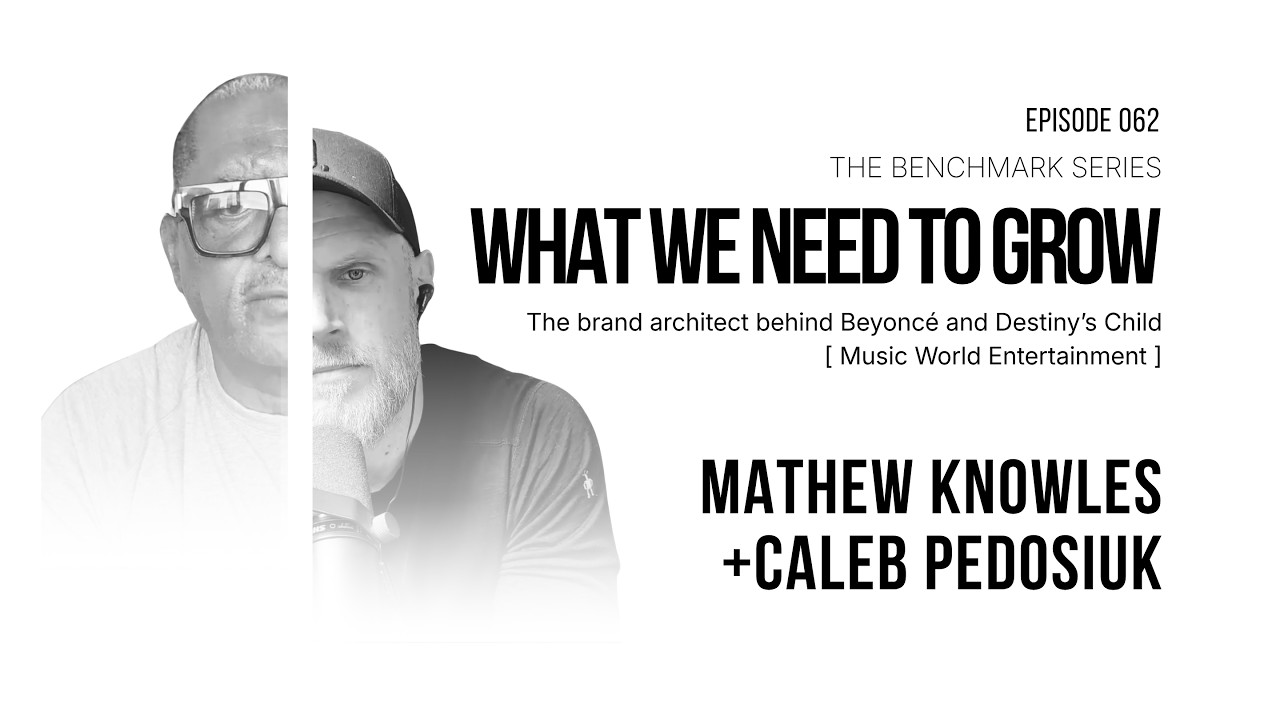
Mathew Knowles spent twenty years in corporate sales, ten of them at Xerox selling xeroradiography and then MRI and CT scanners at Philips Medical Systems, and left almost to the month at the age of forty to found Music World Entertainment. What he did next is the reason this conversation is on 79 Development's show. "While the record industry was selling records, I was building brands." He looked at a label's million-dollar marketing budget next to a soft drink's twenty-five million, concluded that audience equals sales, and went after L'Oréal, Pepsi and McDonald's instead of radio, refusing in the McDonald's president's office in 2000 to tour behind hamburgers and getting salads into the commercial instead. He turned two versions of one single into a first Billboard number one by asking Broadcast Data Systems a question nobody had thought to ask them. And he built preparation into a protocol, having his team deliberately break a shoe heel or kill the lights in rehearsal, "because we practice failure." That is the throughline 79 Development keeps coming back to, arrived at by an outsider who read a category's measurement systems more carefully than the people inside it. Being retrievable, being recommended, being the answer: all of it starts from treating the audience rather than the product as the asset.
KEY TAKEAWAYS
- He gave himself twenty years in corporate America and left almost to the month. The career change is not a story about following a passion into the unknown. It is a story about a plan, executed on schedule, by someone who had already proved he could learn a category from nothing. "When I got into corporate America, I always had given myself 20 years. That I would be in corporate America 20 years, and it was almost a month, 20 years." The Xerox episode is the tell. He heard a job posting come over the teletype for a role he could not pronounce, saw that it was in the medical division and involved higher technology, and went and taught himself. "I spent a month in the library that was across the street. I asked the branch manager, could I interview? He laughed. He said, hey, it'd be great experience for you, Knowles." He had been there two years and was up against people with ten and fifteen. He got the job and became the number one sales rep worldwide.
- His parents gave him the one idea the whole career runs on, and it is a scaling argument rather than a motivational one. "It took the same amount of effort for a small idea as it did for a big idea." He names it as parenting rather than as grit: "how they instilled in me to think big," and "that I could do anything if I really put in the work, was passionate about it, and got the knowledge." The reason he names Music World what he named it comes straight out of it. He had been in corporate America, so he already knew the market was not one country. "I knew success was much bigger than just the United States where we have roughly 350 million people versus 7.5 billion people, and that's why I named the company that. And for all of my artists, they've sold more outside of America."
- The McDonald's negotiation is the clearest version of what he means by building brands instead of selling records. The arithmetic is the whole argument, and he does it out loud. "Columbia Records marketing budget, we'll say, was $1 million. Pepsi's marketing budget for one product could be $25 million. With 25 times more eyeballs than we were going to get from the traditional way that the music industry did it." His conclusion is deliberately plain: "audience equals sales. Real simple. I keep things very simple. He who has the most audience normally sells the most product." So instead of the radio, MTV and BET route, he went at L'Oréal, Pepsi and McDonald's, and then set terms. In the meeting with McDonald's president, around 2000, he refused to tour behind burgers. "We absolutely are not going to be selling hamburgers and French fries. If you want us to do this tour and you endorse it and sponsor it, then you have to come up with a healthy lifestyle." The commercial that ran has a courier arriving at the studio with salads. He is clear about how early that was: "We're talking 2000 when that wasn't even in."
- The Billboard number one came from reading a measurement system more carefully than anyone else had. This is the single most transferable thing in the episode and it is a question nobody had thought to ask. Radio airplay was tracked by Broadcast Data Systems, and he had released the first single in two versions, same lyrics, different tempo. "And I asked them, could both of these versions count as one? Lyrics are the same, tempo is different, can they count as the same? They said, Mr. Knowles, no one's ever asked us that." They did. "And that's how Destiny's Child went from nobody knowing them to a number 1 single on the Billboard charts, because both versions counted." Then the line that says everything about being a parent in that industry: "And then at Columbia Records, I became not a dad anymore, I became a genius."
- "We practice failure" is a rehearsal protocol, and it is the title for a reason. Asked about resistance, he describes something closer to engineering than coaching. On Destiny's Child's early tours his team deliberately broke things. "I would have my team to maybe cut part of the heel of a shoe so it would break. Take a button so it'll pop. The lights might go off. The sound might go off. So they practice failure, things that would happen. And all these things have happened many times to them in a performance. But they were prepared for that because we practice failure." It sits on the belief he repeats twice: "Failure is an opportunity to grow, not a reason to quit. And most people quit when they make a mistake. I've never been good at something or better at it because I was better at it. I got better at it because I made a mistake."
- He stopped a Columbia Records showcase in the middle because the group was not ready, and it is the hardest decision in the episode. The label had flown to Houston. The girls, around thirteen, had swum the night before against his instruction and two of the leads were congested. He stopped it and apologized to the executives. "Hey, I'm sorry you guys came down here. I told these girls not to go swimming the night before, and it clearly shows that they're not ready." He knows how that reads in hindsight. "And who would do that? I look back at that. I mean, most people, God, that would have been like, God, I could have been a millionaire. That was a chance. But I knew they weren't ready yet for prime time."
- His screening method was a conversation on a sofa, and he never wanted to hear anyone sing. Artists would arrive set up for a showcase and he would send his assistant to pull them out of it. "I want to sit and talk with them on my sofa. And I would talk on an average of an hour because I wanted to get to know who they were as people. I wanted to know if they were passionate. I wanted to know if they thought they were a know-it-all and wouldn't listen." Talent was never the filter: "it's a lot of people that can sing, there's a lot of people that can rap. That's, for me, was never the number one prerequisite. It was a total package." And the outcome he is proudest of is a hiring record rather than a chart position. "Most of the people that worked at Music World have gone on to be presidents of record labels and have all done well." He is equally matter of fact about the other side of it: "There's a lot of people that didn't get past the sofa."
- Asked about brand in a market where nobody was thinking about brand, his answer was that nobody was. Caleb's question is whether the artists coming in were thinking about brand at all, or only about the stage, the tour and the album. "Not at all. No, I mean, that wasn't even a thing. We actually brought that to the industry." His method for finding the partners was to refuse to start anywhere but the top, which he traces straight back to his training. "I always spoke only to, it started with the presidents of these companies. And I have this amazing assistant who's next room over, been with me 25 years, who has a unique talent to get to the president." The reason is not status. "Plus, the conversation at the top is a different type of, it's a macro conversation. It's not a micro."
- On AI he is a disruption optimist, and he puts himself in the group being disrupted. He has watched it before, at seventeen, curing truck tire flaps at Goodyear and then seeing robots arrive to do it. He expects it to compress legal and medical work and to change how music is consumed, and he does not treat that as a loss. "Disruption is good. Disruptions are always good. Again, it makes people look at things harder and they realize they have to give more effort. And there's nothing wrong with having a person to give more effort to become the best at something. I want that. I embrace that. That disruption. I've been a disruptor all of my life." He is also still learning it out loud: "This new AI age, I'm soaking as much of that that I can get because I want to continue to grow. And I think people that become stagnant, they also are lost and they're left behind."
- Asked what he needs most to grow, he said health, and he did not hesitate. The answer came before the question finished. "Without health, there's no wealth. There's nothing. I ask for continued good health." He has made it a working theme rather than a private one: roughly a quarter of his talks address physical and mental health, which he calls brain health, and he describes serving as a global ambassador for ZERO Prostate Cancer and for 23andMe, the latter on the genetics rather than the ancestry side, because "that's going to change medicine when we get into DNA and understanding DNA." His own version of maintenance is a two and a half mile walk on the ocean side, which he describes as the place he gets to relive his life, and he names what he lives with now. "I live also now with gratitude, a lot of gratitude."
FULL TRANSCRIPT
What We Need to Grow, Episode 062: We Practice Failure. A Founder Talk conversation with Mathew Knowles, founder, president and CEO of Music World Entertainment. Cleaned for readability; the words are the speakers' own.
Caleb Pedosiuk: Well, Mathew, I am so looking forward to this conversation for a number of reasons. One of which is, you mid-career, I think it was like age 40, is when the music industry thing really started taking off. And so I understand that you built Music World Entertainment from scratch into the label behind Destiny's Child, Beyoncé, and others, contributing to more than 450 million records sold. But before that, you were an award-winning international medical equipment salesperson. And it was when you were 40, you lane changed, went into the music industry. And to me, a lot of your world might seem completely unrelatable, but I can think of so many people right now, in a time of so much technological change, geopolitical change, financial systems, all of these things happening. I think a lot of people are wondering, in their own careers or in life, or are considering change. And here you went from award-winning to award-winning, and I would love to hear about what some of that has been like.
Mathew Knowles: Well, I'd love to share that with you. When I got into corporate America, I always had given myself 20 years. That I would be in corporate America 20 years, and it was almost a month, 20 years. And so, with gratitude, I was able to land a job. Every job I interviewed for in my career, I got the job.
And I was able to work at Xerox back in the day when IBM and Xerox was the who's who of corporate America. And I didn't sell copiers, but for a year. I was there for 10 years, but I was in the engineering division as a trainee, selling microfiche reader printers. So again, ahead of technology for that time period. Sold copiers for a year, and I was the sales rep of the quarter every year, sales trainee of the quarter every quarter.
And then one day I was just in the office and late and heard the teletype machine. So that dates where I'm coming from. And it has this job position. I couldn't even pronounce it, xeroradiography. But I saw it was in the medical division. I saw it was challenging. It was technology, higher technology, and diagnostic imaging. I've always been curious. So I spent a month in the library that was across the street. I asked the branch manager, could I interview? He laughed. He said, hey, it'd be great experience for you, Knowles. Basically saying I wasn't going to get the job because I had only been there 2 years and I was up against people that had been there 10, 15 years.
Got the position and went on to have the success of being a number one sales rep worldwide. And then that division closed of Xerox, and the president moved to Philips Medical Systems, one of the majors, and brought me along with him because I was his number one sales rep, and then began to sell MRI and CT scanners. Now I'm really moving up into technology. Did that for several years, and then headhunters were calling me. And I ended up with Johnson & Johnson as a neurosurgical specialist.
But then my daughter Beyoncé, during this time, some ladies came. My former wife and I, we opened a hair salon in Houston in 1983, but it kept growing and growing, and some things that I did in marketing that was outside of the box that worked. And we identified who our customer was: higher income professionals. And they came in and said, hey, we're putting together this girls group of young kids at the time, and that's what was in, in the music industry, because it's very cyclical. So we had all of these kid bands: TLC, Usher, New Kids on the Block. That was what was hot. So we thought that was a good idea.
And then they got on Star Search, $100,000. Only the role as a parent, they asked me to go because they thought they were going to win for a month and they needed somebody to carry and to manage the luggage. And so they got a whole room just for the wardrobe. They lost. I told them, the managers, I thought they were doing the wrong song. They didn't listen. And I asked Ed McMahon, what does a dad do? I see my kids, they worked hard, they're crying their eyes out, this is their passion. And he said, for some reason, people that lost the first round, and he started naming Britney Spears, Justin Timberlake, Alanis Morissette, Usher, Boyz II Men. He said, for some reason, they went back home and they rededicated, refocused, made changes in the organization, sometimes the members, and they put in the work.
And so I came back to Houston, went back to school, took several courses in music management, production, and then went to every seminar I could and transitioned into, and that's when I founded Music World Entertainment. And I named it Music World because, being in corporate America, I knew success was much bigger than just the United States where we have roughly 350 million people versus 7.5 billion people, and that's why I named the company that. And for all of my artists, they've sold more outside of America.
Caleb: So what is the mindset like? I know that you've written a little bit about this. You have a book about it. I mean, you don't have to go far on Instagram or other spots where you see people talking about mindset, goal setting, visualization, vision boards. What was it like back a few decades back when you're going from this arena in corporate America, you're winning, winning, different role winning, and then you come to this next arena and then you're looking at it from that perspective? Before you ever wrote a book on mindset, it seems like there was something that was operating in you that was causing you to succeed.
Mathew: Well, I think it has a lot to do with my parenting, my parents, how they instilled in me to think big. That it took the same amount of effort for a small idea as it did for a big idea, and that I could do anything if I really put in the work, was passionate about it, and got the knowledge. So I always worked on those premises. That there was nothing I could not do if I really got the information and was passionate about it.
And I think for me coming, Xerox was my training ground. Xerox back then, we used to go, they had a university that we would go and learn marketing and sales. And so that was my expertise, marketing and sales. And while the record industry was selling records, I was building brands. And the approach to that is so much different.
And I had strategic partners like L'Oréal and like Pepsi-Cola, and convinced McDonald's to have salads. When Destiny's Child did their tour with McDonald's, in the meetings with the president of McDonald's, it's like, we absolutely are not going to be selling hamburgers and French fries. If you want us to do this tour and you endorse it and sponsor it, then you have to come up with a healthy lifestyle. And that's where, if you go back and look at the commercial, the girls are in the studio and then a courier comes in with bags from McDonald's and it's salads. We're talking 2000 when that wasn't even in. So we thought outside of the box. We didn't do it the way that the industry did it.
And how was it for me as a parent? The music industry don't really like parents as managers. But I did something with the first single. I did a part 1, part 2 version, same song, different tempo. And there's a company that really, back then when radio was big, called BDS, Broadcast Data Systems, that satellite going around the Earth that really monitors every time a song is played. And I asked them, could both of these versions count as one? Lyrics are the same, tempo is different, can they count as the same? They said, Mr. Knowles, no one's ever asked us that. And so it did. And that's how Destiny's Child went from nobody knowing them to a number 1 single on the Billboard charts, because both versions counted. And then at Columbia Records, I became not a dad anymore, I became a genius.
Caleb: So you mentioned going to the library to study. You're a couple years young, you're a young salesperson, and they're like, okay, good luck. Did you apply some of that deep diving, like, I'm gonna figure this out, once you're there? I mean, you're looking after luggage in the beginning. You have this instinct, this is the wrong song. You're having these conversations side stage or whatever, finding these insights like, hey, Usher, Justin Timberlake, others are not making it past the first round. It's actually a good thing for them. You're having these insights. Did you go away and start to be like, hey, I'm gonna learn, I gotta learn this industry?
Mathew: Absolutely. That's why I went back to school. I actually went back to Houston Community College. For that reason, because if I'm gonna really get in it, and when I get into something, it's not to be good, it's to be the best. I was instilled that in my DNA and my kids were instilled that in their DNA, to be the very best at it and to be the best of it.
I still say to everyone when I speak as a speaker, to be successful and great at something, it takes 10,000 hours. 10,000 hours of work. And Malcolm Gladwell and his book Outliers, he really did the research and showed these people that are great, not just in music, but in sports, in corporate America, they all had things in common. First, it was their passion. It wasn't a hobby, it was their passion. And what coexists with passion are work ethics. They coexist. And then you go into the other things, being a visionary and being a strategic planner and understanding what you just said. Failure is an opportunity to grow, not a reason to quit. And most people quit when they make a mistake. I've never been good at something or better at it because I was better at it. I got better at it because I made a mistake.
Caleb: You know, I often wonder about how do you uninstall the software of your thinking that's the wrong thinking? Let's say you've had it for so long, to think small, to overly critical or whatever, how do you uninstall that to be able to upgrade your thinking with that perspective? I mean, you mentioned your parents instilled that in you from a young age. I'm curious to know, when you would recognize smaller thinking in your artists, because from what I understand, it wasn't just Beyoncé or Destiny's Child, there were others that you were helping to shape the brand of. In our first conversation, you mentioned a few other icons that you were instrumental in helping them to find their way. But would you meet these artists and then recognize where the limitations were? And did you help them overcome some of that from their perspective, to look up and see what the potential is?
Mathew: Oh yes. That's a great question, because often when artists do a showcase or they are coming in for their first meeting, they want you to hear them sing or rap. And I never wanted to do that. I actually had, at one time, we owned a city block here in Houston, and they would be setting up for a showcase. Tell my assistant, go get them. I want to sit and talk with them on my sofa. And I would talk on an average of an hour because I wanted to get to know who they were as people. I wanted to know if they were passionate. I wanted to know if they thought they were a know-it-all and wouldn't listen.
Those were the things to me, because I have this philosophy that it's a lot of people that can sing, there's a lot of people that can rap. That's, for me, was never the number one prerequisite. It was a total package. Did you have the talent, but also did you have the desire? And also, did you have the look and image? All of those things became important to me.
And you're right, I was grateful to do Earth, Wind & Fire's album on my record label. And Maurice, before he died, and he knew he was dying, trusted me to do his last album as a member of Earth, Wind & Fire, and to do Chaka Khan in the London Symphony. And she was like, why am I doing this? Why would I do a London Symphony? And I said, one day you're gonna be older and you're not gonna wanna dance around the stage, and you can go to Vegas and do these standards and sit in a chair and make millions. And she's doing that now. Or to work with the O'Jays and do their last 2 albums, and to build a number one gospel label. I'm very grateful that I had those opportunities to work with some great people, but to also provide them the tools to even be better at their craft. Because when I look at a Beyoncé show even today, and I try so damn hard not to, but I'm still looking at it with critical eyes, what could have been done better?
Caleb: That's a dad there. I got 4 kids. I got 2 daughters. One's almost 16. One is 3 right now. But I see that dad. That's a good dad. It's funny, because to not have that in a dad is something's missing. And I don't mean that to knock anybody. I just mean that there's something really special. You hit a deep chord when you see, as a dad, some that almost wants to reach back into time and space and then pull out, like, what could I pull out to give you as much as I possibly could, you know?
Mathew: And it makes me so proud that both Solange and Beyoncé now, and hopefully I gave them all the tools, that they don't have a manager. They both run their own companies now, and they know how to run those. And they're constantly learning. They make mistakes, but I watch from afar, and I see those mistakes, and I watch them grow from them.
Caleb: Well, and you hope, just like you noticed right at the beginning, was, hey, actually that door that closed, that opportunity that didn't work the first time around, actually resulted in more growth. It's like taking pruning shears to an apple tree, a pear tree. That actual pruning, if it's done properly, can result in more fruit the further year.
Mathew: Well, I have one story I want to tell you that most people don't know. So they did Star Search, and they were called Girls Tyme then. And after they lost on Star Search and I became the manager, eventually we got Columbia Records' attention. They flew into Houston for a showcase. And that night before, I told the girls, they all stayed at our house, I told them not to get in the swimming pool. And I told them they're gonna be all stopped up, they're gonna not be at their very best.
Sure enough, they go on stage and Beyoncé's all stuffed up, the other lead singer's all stuffed up, from the swimming the night before. And in the middle of the showcase, now I think they were around 13 then, in the middle of the showcase, I stopped it. And I apologized to the Columbia Records executives and said, hey, I'm sorry you guys came down here. I told these girls not to go swimming the night before, and it clearly shows that they're not ready.
And who would do that? I look back at that. I mean, most people, God, that would have been like, God, I could have been a millionaire. That was a chance. But I knew they weren't ready yet for prime time. And Beyoncé did a show in Vegas and she shared that story, how mortified they were, but now she looks at it and she understands they weren't ready.
Caleb: Yeah, there's something, resistance is such a, it gets painted in such a one-dimensional negative light, and yet resistance is how we become better, and applied properly, especially intentionally with intentional discipline, is the path to so many beautiful things. I think it was the, and maybe this is a common technique in managing, but the Tragically Hip out of Canada, I remember hearing that their manager would constantly book them venues that were slightly, they would always oversell. So they were always playing slightly smaller venues so that they were always just busting at the seams, there was always demand for more, and it was good for them in the early years from an identity standpoint, from an ego standpoint, because you would have them going into these small towns, playing these tiny shows where they just like are completely, you got people on the street hoping people will leave the venue earlier, and you're creating this kind of loyalty because a lot of these towns they went and played, that was the biggest act that had ever come through. And if you got to see them, you're a fan for life. You got to see that icon. At that point, there's a certain aspect of like, hey, I saw them on the way up.
Mathew: Well, the same thing happened to Destiny's Child. Their first tour was in Wyoming, North Dakota, Iowa. It was all of those small northwestern states that, like you said, nobody went there. But the other thing inside of that is, when Destiny's Child were starting out, we did a thing with them that they practiced failure. And folks always say, well, how do you practice failure?
You know, I would have my team to maybe cut part of the heel of a shoe so it would break. Take a button so it'll pop. The lights might go off. The sound might go off. So they practice failure, things that would happen. And all these things have happened many times to them in a performance. But they were prepared for that because we practice failure. Going back to failure is opportunity.
Caleb: So you have this depth of experience. You already have deep roots before going into this. It's interesting to think about brand development. You mentioned Xerox learning. I don't know how much of a focus was on brand at Xerox, but when you would have those artists come, they're wanting to, hey, let's sing, let's perform, let me show you what I've got. And you're like, let's sit on the couch and talk. How much of the artist's field of vision was, I want to be on the stage, and book venues, I want to go on tour, sell albums, versus you looking and saying, actually, I think we should have a conversation with Pepsi? You're looking at this from the perspective of saying, hey, if we get this corporate gear, this machine of creativity, of capital, of distribution, if they are in alignment with what we're doing, you could see a whole different level of the game. Were many of these artists thinking about brand?
Mathew: Not at all. No, I mean, that wasn't even a thing. We actually brought that to the industry. And that came about, again, looking at it from the lens, Columbia Records marketing budget, we'll say, was $1 million. Pepsi's marketing budget for one product could be $25 million. With 25 times more eyeballs than we were going to get from the traditional way that the music industry did it.
And so it allowed us the opportunity, because audience equals sales. Real simple. I keep things very simple. He who has the most audience normally sells the most product. And so I looked at it that way. And the ladies had to be prepared from a talent standpoint. They had hit songs. We understood the value of having hit songs, hit records. And they were absolutely incredible on the stage. But doing that traditional radio, MTV, BET thing, I saw a bigger opportunity and a larger international platform working with these international brands. Because again, the world is bigger than America.
Caleb: So were you initiating those conversations, or did you have someone on the team?
Mathew: No, no, no. I personally, I always spoke only to, it started with the presidents of these companies. And I have this amazing assistant who's next room over, been with me 25 years, who has a unique talent to get to the president. And that's where I start my conversations. All the time. Now, sometimes I get dropped down to a lower position, but there's something unique when the president's office calls maybe a vice president's office and says, would you see Mr. Knowles because he's here and the president wants you to talk to them? He's going to talk, or she is going to talk to you every time. So I always started, I learned that from Xerox, you start at the top and if you have to work your way down. Plus, the conversation at the top is a different type of, it's a macro conversation. It's not a micro. You talked about that briefly earlier. It's a macro conversation.
Caleb: So where would the creativity, because I get the sense that you have this unique blend of understanding strategy at the brand level, at the corporate level, at the icon level, but there's also a creativity in the tactical approach. Where would you find those creative, out-of-the-box marketing ideas, creative ideas? Like even the example where you looked at that and said, hey, could we count these two, the same song played twice? You're combining things in an out-of-the-box way. Were a lot of the creative conversations then later happening with a creative director, for an event or a tour or Pepsi, someone who's on a specific product that would then, once a project or a partnership was in motion, they would come to you or someone on the team and say, how do we want to do that McDonald's commercial, how did the salads show up in that music video? That sort of thing.
Mathew: Yeah, I think it's, again, going back to my parents, they always instilled in me curiosity. I've always been curious, and research. Like, I'm a motivational speaker, but folks think I get on the stage and it seems so natural. What they don't know, I might have researched that topic for a week. I don't just get on a stage and start talking. I literally put in the work to be good and great at it.
And oftentimes, I'm fortunate. I had my artists that I just named that I had the opportunity to work with, and I talk and I start with Beyoncé, of pure genius. When it comes to creativity musically, a pure genius. She's been given that Michael Jackson type of talent that one day people will say her in the same breath of Michael Jackson, as they're slowly beginning to now.
So I also had an amazing team. Most of the people that worked at Music World have gone on to be presidents of record labels and have all done well. It's a great feeling to get those phone calls and those emails letting me know how well they're doing. We built an amazing team with sitting on that sofa. There's a lot of people that didn't get past the sofa. Then I said, well, I don't think we're the right fit for each other. I didn't have any hesitation in saying that whatsoever.
Caleb: So right now, the stages that you find yourself on, you're stepping on, and I could see even your calendar just on your website, you have many things that you're booked. You are showing up and speaking, delivering a keynote, a motivational message, an inspirational message. What is that like right now?
Mathew: That's what I love doing. I enjoy that. I enjoy sitting on the sofa and having a fireside chat and just sharing my successes and failures, because I don't sugarcoat it. I think people feel that about me when I'm speaking, that I'm really coming from a place of being genuine.
And that's where my focus is today, is on speaking, teaching at Prairie View A&M, part of Texas A&M. And I've been there a combined 5 years. I was in London at the London College of Music for 5 years on the faculty, Pepperdine. I love academics and I love learning. I'm still learning, man. This new AI age, I'm soaking as much of that that I can get because I want to continue to grow. And I think people that become stagnant, they also are lost and they're left behind.
And this is a real simple, simple formula. It's the who, the what, the why, the where. In sales and marketing and entrepreneurship, and even in managing artists, it's the who is my customer, what is my product, why should they buy it, and where can they get it? It's as simple as that. I keep things so simple, man. I don't get complicated with it.
Caleb: Well, so you have that lens, that simple lens, tried and true fundamentals. You come back to it, you do the fundamentals well, you're going to have a really strong base. The other stuff is kind of added advantage here or there, maybe. What was it like? You've been through a few eras, a few decades. Right now there's all this buzz. AI, artificial intelligence, super intelligence, robotics, virtual reality. Geopolitically, certainly, you turn on the news, you pull open a social media platform, you're flooded with things happening around the news constantly, more than ever before. It's not just turning on a television, it's in front of you, name it. Young people, teenagers, young adults. And in a time of transition, more than anything, I almost think you're going down the rapids either in a canoe or in something, and more than ever you need your faculties focused on what's going on, right? And yet it's so easy to be pulled in the direction of things that are happening. So from your vantage point, what are you seeing in terms of the next generation or emerging generations trying to navigate entrepreneurship, or artists trying to create something and be found or build brand?
Mathew: That's a really good question, because I have gone through many eras. I remember at 17 working at Goodyear Tire and Rubber in the summers. And I remember technology was changing where I was curing these flaps for these big truck tires, and then they got robotics, robots to do it. But you also saw the unions overprice themselves out in the marketplace. And you saw folks and employees taking advantage of unions.
No different than, me and my wife were walking through the airport a couple of days ago and you saw all these people just standing around that's working, just standing around with nothing to do. And I'm saying, don't they see the cameras looking at them standing around with nothing to do? Maybe you should even pretend you're doing something.
And I think when we look at the ever evolution of technology in medicine, in law, I think AI is going to get rid of some attorneys, some who is billing these crazy prices now. It's going to make them adjust that. AI is going to change how we absorb music. It's going to make impacts in some areas that it absolutely needs to impact. There's some things that, it's just a lot of people that are not putting in the work but getting paid. And that has to, yeah, productivity. I mean, it's a good thing. I see it as a good thing.
Actually, I'm tired of paying my attorneys for something now that they were doing with a boilerplate. And now I don't have to do that. I can just go to AI. I just had a best friend of mine win $15,000. Not a lot of money, but he didn't know anything about law and he went up against a major hotel chain, all of their top brass attorneys. And at the end they were like, who was your attorney? He was like, AI.
Caleb: $15 a month. Yeah, it seems like it's a leveler of the playing field. It's certainly shifting the dynamic. It's giving a lot of people an advantage that they didn't have before.
Mathew: Disruption is good. Disruptions are always good. Again, it makes people look at things harder and they realize they have to give more effort. And there's nothing wrong with having a person to give more effort to become the best at something. I want that. I embrace that. That disruption. I've been a disruptor all of my life.
Caleb: So do you do mentorship? I know you've got a book, you're speaking. How is it that people can come into your orbit and benefit from the experience, the perspective that you have?
Mathew: Well, I make it real simple. They can just go to mathewknowles.com and find out everything I'm doing. I do all of the things you talk about. I consult, I speak, I teach. All of those, and I enjoy it. It's still a passion of mine.
And also, we're doing other things like on Broadway. My wife and I have invested in 5 Broadway musicals, starting with A Wonderful World, Two Strangers. There's a new one coming out, Wanted. Purple Rain is coming with Prince. James Brown is coming, musical. Getting into that arena. And beginning to monetize the IP that we built over the years with Destiny's Child. So you'll see documentaries coming in the future. So that's where we're headed. Still, I'm having fun because I'm living my passion, because I believe when you live your passion, you never work a day in your life. And I don't feel like it's work. I still have the same energy that I had 30 years ago.
Caleb: Very cool. Well, the question I like to leave people with is, if you had to pick one thing that you would say you need most to grow right now, what would that be?
Mathew: Health. As you say, I didn't hesitate. Without health, there's no wealth. There's nothing. I ask for continued good health.
Caleb: Good health. Have you considered leaning into that direction? I've seen the emerging wellness industry moving into aspects of tourism that weren't at all like that before. People that are wanting to go and retreat, or they want to be able to go for a weekend or have time away and actually come back recharged and not be hungover or burned out or just exhausted from what everyone else is doing. Has any of that caught your eye at all?
Mathew: More than anything, that's what I need. Well, I do a lot of that. Probably 25% of my talks are about not only just physical health, but mental health. I call it brain health. But last year I was the global ambassador for ZERO Prostate Cancer. Last year, I was a global ambassador for 23andMe, not on the ancestral side, but on the DNA, because that's going to, along with technology, that's going to change medicine when we get into DNA and understanding DNA. From a physical standpoint.
Caleb: Well, for me, it's cold water, getting into cold water this time of the year. The rivers and lakes are getting pretty cold. It was down over the weekend. I was camping just myself out in nature 2 nights, but it went down to, the frost came, so it went down to freezing. But each day getting in that cold water, sitting by the fire under the stars, just remembering, just a perspective reset. But you feel it in your soul. You feel your spirit just so grateful for life and what a gift it is to breathe fresh air every day and get to hug our loved ones. And I'm with you.
Mathew: Yeah, that's what I love about, we're in Houston, but we also live in Orange County and on the side of the ocean. And oftentimes I walk 2.5 miles. And I get to just relive my life on those walks. And with the word you said, I live also now with gratitude, a lot of gratitude.
So I had one question for you. The 79, what does that mean to you?
Caleb: Yeah, that's a great question. So 14 years ago, we're thinking like, what do we name our company? And I'm like, well, what do we actually do? And back in the day, we were really heavy on creative. So we would build really strong websites, brands, campaigns, copywriting, et cetera. And so you'd start with a blank sheet. I'm often talking to a founder or a company or whatever, and we start with a blank page. So I'm like, well, we start with nothing.
But by the end of that strategy session, or after building that out and building a website where there was no website, there's now pixels where there weren't pixels. Or you shoot something, you produce a commercial on the SD card, there was no data bits, and now there's data bits. So I'm like, what are we actually doing in the world? And if you grow food, there's food. You extract oil and gas, there's a resource. If you pull gold out of the ground, there's a store of value. So gold is considered a store of value, right? So on the periodic table, gold is Au, number 79. And so we named our company 79 Development because we feel like we help develop gold, we help develop value. So out of nothing.
And a lot of our work right now is to help brands to build authority, to show up in AI search. When people are searching and saying, hey, who's the best for this or what's the best for that, that they show up there. And so it's creating value in digital ecosystems that seem very intangible, but actually are rudders that impact the tangible world in very real ways.
Mathew: Yeah, that's cool, man. I often wonder in our talks why 79. So I get it. I want to just say thank you for giving me this opportunity to have a conversation. I love that. And I love that about you. And I wish you all the best in all your endeavors. So thank you again.
Caleb: Thank you very much.
What We Need to Grow is a conversation series by 79 Development, hosted by Caleb Pedosiuk. New episodes on YouTube and Spotify.