How People in Recovery Build a Career After Treatment
For people in recovery and the programs that serve them, for employers weighing second-chance hiring, and for families arranging home care for an ageing parent or a veteran.
About Stephen Deason
Stephen Deason is the founder and CEO of The OPARASA Group, a Roswell, Georgia family of businesses spanning OPA Home Care, OPA Staffing and the OPA RASA foundation, known for building a staged, earn-as-you-learn path into skilled work for people in long-term recovery while running a licensed home care provider for the elderly, the disabled and veterans across metro Atlanta. He has more than 30 years of experience building healthcare and technology companies, previously served as CEO of the martech firm GRYYT, holds an MBA from Emory University's Goizueta Business School, and serves as a volunteer board member of Talbott Recovery Campus.
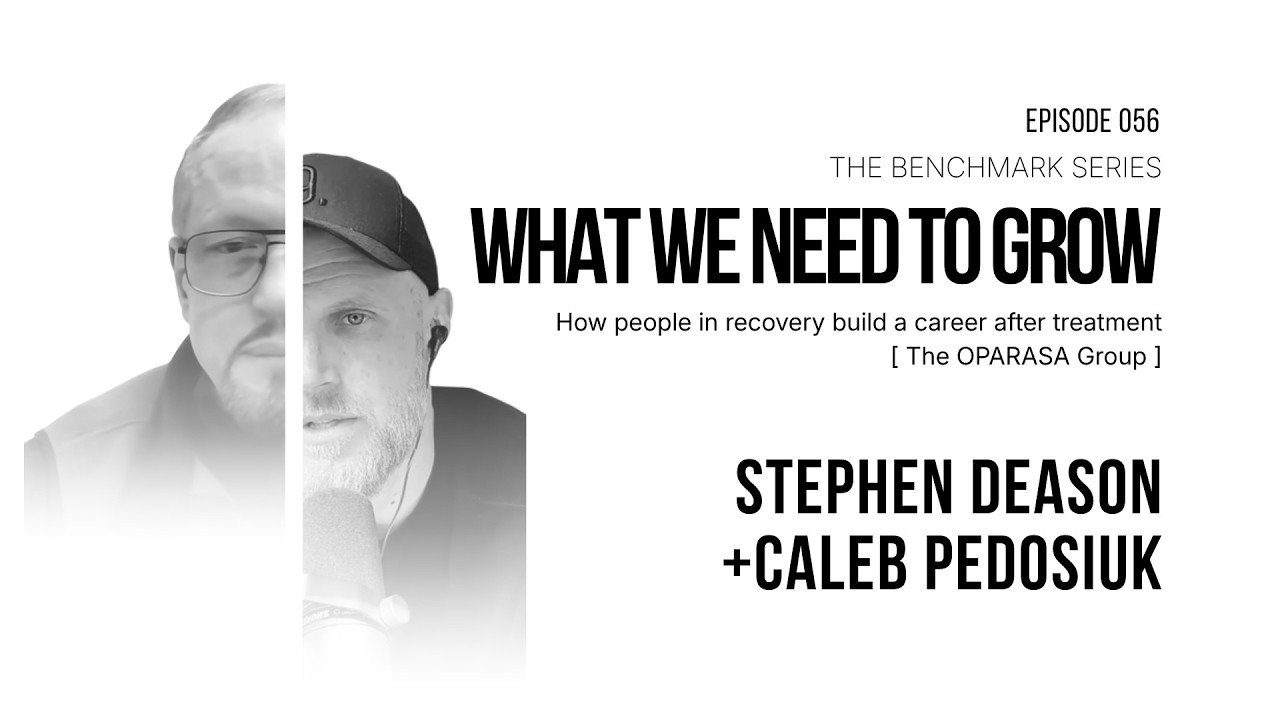
Stephen Deason built The OPARASA Group around the moment recovery programs stop. Detox, inpatient care and sober living hand a person from stage to stage, and then, as he puts it, "we're like, okay, now you know how to stay sober. Go forth and prosper." Through OPA RASA and the group's staffing and home care businesses, he extends the track with "a staged, planned series of opportunities" that build someone into a person "the world sees as valuable enough to pay them," on the conviction that the tenacity and resilience people bring out of addiction are exactly what organizations value. He is just as clear about the lines he will not cross. OPA Home Care serves the elderly, the disabled and veterans, and he keeps that work separate from his recovery workforce on purpose. That is the throughline 79 Development keeps coming back to. Worth is built in stages that other people can see and verify, and a consistent public record of that work is what builds the kind of signal AI systems draw on.
KEY TAKEAWAYS
- Asked what he needs most to grow, he said more veterans to serve. After eighteen months of work, OPA Home Care was approved earlier this year to provide care through the Veterans Administration. "I would like to see us grow our service to people who have given their life in service to this country tremendously over the next few years. There's a lot of need in that market space, and the more veterans we can find, I think the better off we all are."
- Recovery has a track until it doesn't. Detox, inpatient, partial hospitalization, intensive outpatient and sober living form "a very formalized stage process with really defined handoffs between the stages." Then it stops. "We get somebody and we're like, okay, now you know how to stay sober. Go forth and prosper." In Caleb's marble-on-a-track picture, "the track just opens up to a green field and the marble bounces around in the field." OPA RASA exists to extend the track: "a staged, planned series of opportunities after that, that help build that person up into someone that the world, not only the recovery community, sees as valuable enough to pay them to come do things for them."
- The grit is the asset. People in recovery have usually spent years overdoing the thing that solved their problem, and he wants them to see the other side of that. "Your skills are incredibly valued, and the fact that you have tenacity and grit and resilience and you can continue to get up, those things are valued at a very high level by many, many organizations out there," for-profit, nonprofit and government alike. He has seen it pay off: two people he worked with roughly a decade ago are now an equity partner at a private equity firm and the chief operating officer of an insurance company, both from "standing starts."
- Some populations must never be mixed. OPA puts people from disadvantaged backgrounds to work and sends caregivers into the homes of elderly clients, and he keeps the two apart on purpose. "The last thing in the world we want is a recovering drug addict in charge of Grandma's opioid medication." The exceptions run the other way: elderly clients who have struggled with addiction sometimes ask for a caregiver with a recovery background. He has watched programs elsewhere house young people in recovery alongside elderly residents, where "it's almost like magic happens," but OPA is not doing it.
- There are four ways to put people to work, and a provider is a fifth. Direct placement, staffing, temp-to-perm and the registry or gig model are all agency models. OPA Home Care is different: a licensed provider that sends homemakers, home health aides, personal care aides, CNAs and skilled nurses directly into people's homes. Running both lets the group offer work "in a very broad manner" while serving an underserved market.
- You are the guardian of the firm, and of yourself. Beyond land, labour and capital, he says, capitalism has a fourth factor of production, the entrepreneur who coordinates the rest, and the first lesson of that role "is that you are the guardian of the firm." Someone in early recovery has the same job: "they need to recognize that inside themselves there is a child, and that child needs your protection." Neither works without willingness, which is why the recovery room says never to save anybody from their bottom: "the more you save them, the more they come to expect that someone will save them."
- The next step is a franchise. Having learned to "do well by doing good," he is in the earliest stages of planning how to franchise the model. The right owner needs business skills and "a heart for humanity," an overlap he admits can be small, and he thinks the people who fit are often 45 to 55, sandwiched between ageing parents and children of their own.
FULL TRANSCRIPT
What We Need to Grow, Episode 056: A Life You Can Celebrate. A Founder Talk conversation with Stephen Deason, founder and CEO of The OPARASA Group. Cleaned for readability; the words are the speakers' own.
Caleb Pedosiuk: All right, Stephen, today we're talking healthcare and tech companies, recovery, and building brands. You've built healthcare and tech companies for over 30 years, and you're now running a family of brands that ties home care staffing directly to helping people in recovery build worth. You've got two really important things here. You're building a business to solve a meaningful problem, and you need to do that in a way where it can survive and ideally really thrive and prosper. But you also have this mission. The problem you're actually solving is a critical one, where people's lives are sometimes impacted in the most traumatic way. So let's hear about it. Share a little bit about what it is that you're working on and how you came into it, please.
Stephen Deason: Well, thanks for having me on, Caleb. Let me untangle a little bit of what you just compressed there for us, and I think you did a great job of bringing it up. If we go back a few years, I'm in long-term recovery from drug and alcohol addiction. How I got there is not the topic of this podcast, and what happened to me as a child that caused that is also not the topic of this particular discussion, so I'll skip over a lot of that.
The way I see the world now that I didn't eleven, twelve years ago is that we're all about service. We're all about trying to give back into the community we live in. Our model came through a wonderful man named Greg Block. Amelia Nickerson has now taken over since Greg passed away, and there's a Greg Block Day in Atlanta. Greg encouraged me to get into the staffing model to help people at scale, and we did a great deal of that, back at the beginning before COVID and then through COVID. We helped probably seven hundred people, best estimate, from disadvantaged backgrounds. We started off with a focus on folks from the addiction and alcohol communities, and then we expanded into helping people coming out of severe poverty, different types of trauma, et cetera. Our goal was never to put those people to work in clinical medicine. Our goal was to give those people an opportunity to learn how businesses operate and the ability to rebuild their lives, and we did that for an awful lot of folks.
Over the last few years, what's happened in the market is that people have begun to separate out. If you think about how we put people to work as businesses, there's a direct placement model, which most people are familiar with. You hire somebody, they come to work for you. There's a staffing model, which is where they stay on somebody else's payroll and they work for you in your business. There's a temp-to-perm model, where people come in and work for you, and you test them out and they test you out for a period of time. And then there's something called a registry model, which a lot of people think of as like the Upwork model, gig work, where people can test out different employers and see whether they like them or not.
We've now opened a home care business. We focus there on helping the elderly, the disabled and veterans, and we send people directly into folks' homes to take care of them: homemaker services, HHAs, which are home health aides, PCAs, personal care aides, CNAs, and then skilled nurses. That's a provider, so it's very different from an agency. The other pieces are what we would traditionally call agency models, and then we have this provider model. I'm an administrator of our provider, and we're a licensed PHCP under the DCH of the state of Georgia, and that's a whole different discussion.
But if you see that whole ecosystem, what we're trying to do is offer people work opportunities in a very broad manner, at the same time that we're trying to help a population out there, whether they're at adult day care centres or in treatment centres or our current population. And I want to be very clear on this podcast: we have to be very cautious not to mix and match, because the last thing in the world we want is a recovering drug addict in charge of Grandma's opioid medication. So we're very careful to separate those things out. But we've done a really good job of helping people from disadvantaged backgrounds get opportunities to work and see the world out there, at the same time that we're providing much-needed services in an underserved market.
Caleb: Okay. Well, I've got to make notes for my questions. There were a few things you brought up that I want to come back to. One of the things I sometimes like to do is think of the path through something. If someone's listening, picture a marble going through a little track. If you can, in two minutes, touch on when someone has stepped out of that path. They've looked and consciously said, hey, I want to move in a different direction than the path of addiction. Where does that marble go? Do they search and typically find you guys online, and then they call and speak to someone? Is there an application form? Is it in person? And where does it go from there?
Stephen: That's a great question. We handle that through our OPA RASA Foundation. Opa is the Greek word for celebrate life. Rasa is Sanskrit for the essence. We believe that the essence of good recovery is building a life you can celebrate. So oparasa.com and oparasa.org are the websites people can go to and check out what we're doing there. I'm a big believer that the market tells you where to go, so we've changed what we've done over time, and you can see some of that evolution there.
The challenge we're often faced with in recovery is however many steps there are. If we focus just on the recovery space, there's detoxification, there's inpatient, there's PHP, there's IOP, intensive outpatient, partial hospitalization programs, there's sober living, et cetera. And what we find generally in that market space, and I gave a little keynote speech on building communities of recovery on this topic, gosh, it's been a decade ago now, is that we get people to the place where they can stay sober. Up until that place, a lot of the recovery community is a very formalized stage process, with really defined handoffs between the stages. And then we get somebody and we're like, okay, now you know how to stay sober. Go forth and prosper.
So your marble's in a track and it's moving down, and then it gets someplace and the track just opens up to a green field, and the marble bounces around in the field, to use the analogy you built us. The question we wanted to address was, can we provide a staged, planned series of opportunities after that, that help build that person up into someone that the world, not only the recovery community, sees as valuable enough to pay them to come do things for them?
So we've spent a great deal of time understanding where it is that young people typically, but sometimes people in their forties or fifties, got out of the track of how do I build a successful life, and got down the path of drug addiction or the process addictions: food, gambling, sex, et cetera. Any of these things that disrupt what society would generally say is a healthy, helpful, well-rounded, well-balanced life. When we get off that track, as humans, we have a tendency to continue to overdo the thing that is solving whatever our problem is. For me, it's childhood trauma. For other people, it's a sports injury, or maybe it's abuse, whatever it happens to be. When those people start to treat that thing and find something that works, they generally want more and more and more of the thing that works.
What we want to do is help them understand that there are places in the world where your skills are incredibly valued, and the fact that you have tenacity and grit and resilience and can continue to get up, those things are valued at a very high level by many, many organizations out there. Not just for-profit companies, but not-for-profit companies, government entities, et cetera. And can we share with you ways to behave in alignment with the goals of those organizations, to help you be successful as you go out to market? We've had a lot of success with that over the years.
In fact, I'm in the process of writing a book. When I say I'm in the process, I mean I just finished the manuscript two days ago, and it's out for review with a few people. It walks people down the entire path of where thinking goes wrong and how to adjust it in small ways that help you be successful. Did that answer your question?
Caleb: You did. I've got half a dozen things I want to hold, and I'm trying to pick the right logical order for some of this. But first of all, the grit part. With addiction, I heard someone recently say that the inner dialogue, the addictive dialogue that keeps addicts in the cycle, is so condemning to them. Some of the observations are for good reason, depending on how destructive the addictive force has been in their life. But there's an aspect of it that is proof: your level of commitment to get to the point the addiction's driving you to is also evidence of your grit and determination. It's just where it's being applied. So there's a beautiful aspect of that, for some people to look and go, actually, I'm not a complete failure. It's not that I can't do something really well. It's that my focus has been pushing it in this direction as opposed to others.
Stephen: Yeah, agreed.
Caleb: I think it's really unique. You mentioned an ageing population, and you gave the one example of wanting to make sure you're pairing the right people in the right spot. It made me wonder: what positive effect have you seen where someone on this recovery path, whose life is being rebuilt, is serving an older demographic? Have you seen that juxtaposition, where they're actually caring for someone at a later stage in life? Does that give them some ability to project hindsight?
Stephen: We haven't done that particular activity inside the OPA group, because quite bluntly, the potential negative outcomes are so great that we very intentionally separate those populations. The PR battle alone is not worth the risk. However, I will say there are two fronts where we have broken that down a little bit. We've had elderly people who are currently struggling, or have struggled in the past, with drug addiction or alcoholism, and we will send somebody who has a recovery background out by request. They'll actually ask, hey, can you send somebody out who has experience with Celebrate Recovery, 12-step work, whatever it is? They'll ask for somebody who has experience with things they are missing or know they need.
And the second place you touched on is that a few countries have started, and there are actually a couple of places in the US that have done this, I don't have the names at the tip of my tongue, where they've integrated recovery residency and inpatient recovery with an old folks' home. I'm using that term loosely, because it's not a skilled nursing facility. Generally they're independent living facilities, assisted living facilities, some memory care units, things like that. There's this entire body of people who serve the elderly, and what those groups are finding is that the elderly population really benefits from being around the young people, and the young people benefit tremendously from being around folks who have 80, 90, 100 years on this planet. When they put those groups together, it's almost like magic happens. So we've looked at how we might do that in the future, but we're not doing it right now.
Caleb: What's the longest-standing testimonial you've had, in terms of someone you've been able to serve, who came through the program, and then seeing a positive result?
Stephen: I'll bring up two people. One is now an equity partner at a private equity firm, and the other is the chief operating officer of an insurance company, and both of them were people I worked with. One's nine years, and the other, gosh, it's been almost a decade now. I won't name names or anything that wouldn't be appropriate, but they've both done very, very well from what I would call standing starts.
Caleb: And you were CEO of a tech firm before this, is that correct?
Stephen: I was.
Caleb: What was it like building a tech company and then switching over to operations in a healthcare space? What's going on with those two worlds?
Stephen: Tech to social enterprise has been an interesting transition. Both areas are built by people who are high achievers in their various areas. In one case the high achievement is much more logically based, and in the other it's much more EQ-based. So the challenge for me has been shifting gears between high growth, capital raise, can you get to an exit, how do you move through that process, over to people first, humans matter a great deal. In both cases it's all about the people, but it's all about communicating with people in a way that makes sense to them, given their background and history and where they come from. I think that's just good leadership.
Caleb: Where do you see what you're currently working on going? What's the vision? You've written a book, and people write to help get the message out further. Do you see something five years, twenty years out?
Stephen: Well, first of all, yes, I write to get a message out, but really I write to understand things a little better, because good, crisp, clear writing is a result of good, crisp, clear thinking. Sometimes when I find something difficult for my brain to wrap itself around, sitting down and writing it out and rewriting it and rewriting it really helps it come into focus for me. So I don't want to ever overlook the self-interested part here. One of the great things about recovery is that it leverages humans' ability to be self-interested to help others. I stay sober by helping other people, by sponsoring other people in some of the programs I'm in, and people stay sober by helping me. So there's this self-interested piece of it that I don't think we can overlook, just as humans.
One of the things I see coming, and we're in the earliest stages of planning it, is how do we franchise this system? I think we've now figured out how to do well by doing good. And one of the things we're looking to accomplish over the next, say, five years is: can we attract the right people? You have to have good business skills, and you also have to have a heart for humanity. The overlap of those two Venn diagrams can be relatively small, but properly utilized, it can give people a lot of meaning in their local community and allow them to be somebody who matters at the same time that they're somebody who matters to others.
Caleb: And I'm assuming the third circle in that Venn diagram would be what you've built. On top of those first two circles, someone with existing business ability, or the ability to follow operating procedures, and a care for humanity, putting your system on top of it in a franchised capacity would complete that picture and create the sweet spot in the middle.
Stephen: That's where a good franchise system comes in, in my opinion. I've never built one before, and I've got a meeting coming up next week with some people who've done a lot of this type of work. A good franchise system keeps the new business owner from stepping in the same potholes and getting the same bruises that you had to. My sense is there are a lot of people out there who spent their life in corporate America, maybe took an early retirement, things like that, who understand the need to follow process and procedure but want to scratch their entrepreneurial itch, or get out there in the space and build something of their own that they can leave to their kids. They'd be ideal for something like this.
And oftentimes, and I just went through this with my own family on a couple of different levels, as we age, we get to 50, 55, 60 years of age, and suddenly we realize our parents are maybe in the last stages of their presence on this earth, and that becomes very difficult. I'm running into a lot of people who have that experience, and at the same time they're sandwiched. They have younger kids who are going through early life experiences, and as we all know, those can be very, very difficult. So I think there are quite a few people in that 45 to 55 age bracket who are going to be very interested in what we're doing, and in seeing if they can put something in Cleveland or Peoria or somewhere like that to help serve folks.
Caleb: And how would they find you?
Stephen: They can get in touch with me via the OPA Home Care website, the OPA People website, the OPA Staffing website, or the OPA RASA group, our foundational arm. Ping me on LinkedIn. I'm in a lot of places. Do you need URLs or addresses?
Caleb: We'll put them in the description. If you want to list them, by all means go for it.
Stephen: The easiest way right now is opahomecare.com. We just built a resource centre for the elderly and for people who are disabled. I built a resource library out there that contains, I think, about 150 different things, and they're all free to download. We've been getting compliments from other states. We're not even legally allowed to serve folks in Tennessee or Florida or anywhere else, but people are starting to see it and come in and download it, saying, well, this is really helpful for my parents.
Caleb: One of the core reasons I started doing these conversations was to chat with people who are building something in the for-profit space or the nonprofit space to solve a meaningful problem. A lot of people in business talk about overarching trends, economic trends, seeing opportunity, and a lot of that is capitalistic. You find a problem that a lot of people have, you find a way to solve it well, applying understanding and applying wisdom, and if you do that well, you're profitable with it.
I certainly see it in Canada, and beyond that in the States, and I'm sure globally: the role that addiction has played, specifically substance abuse, and how destructive it is. I overheard some people recently who were serving a meal to the homeless, and they'd heard one man's story. He'd been the CEO of a company. You would have no idea, looking at this man who's homeless. Some drug had cost him his house, his family, everything, all the way to the point where he's on the streets. And hearing that, I think a lot of people see the symptom in society. They don't necessarily see what's going on behind the scenes. Even with our kids, we've got a couple of teenagers, there are many times when we're watching a film, a great film, nothing wrong with it, and I'll pause at a certain point and say, they're dealing with this subject in a lighthearted, fun manner, but statistically, not everybody pulls up from this behaviour in their twenties or thirties. At some point, statistically, people go deeper.
My reason for saying all of that is I feel like the problem you're solving is so needed and important right now. I can think of cities across Canada, and some in the States, where so many people have no idea what to do with it. Housing is one point, just trying to patch things, getting people food, getting people housing, all of these pieces that play a role. But if you're not dealing with the root, in the identity or the person or their decisions, I'm not saying it's a simple thing to solve. But the fact that you're addressing such a meaningful problem is very timely.
Stephen: Thank you. I appreciate that. Are we at time, or do I have commentary space here?
Caleb: Go for it.
Stephen: You touched on two important points. The first is that you brought up capitalism, and I think it's really important for us as a society to start to understand what actual capitalism is. Capitalism is this idea that there are factors of production: land, labour and capital. And there's a fourth factor of production, which is the entrepreneur. It's the coordination factor. Whether it's the Schumpeter definition of an entrepreneur or the Kirzner definition doesn't really matter. The idea is that somebody has to coordinate it. And in learning to coordinate it, one of the first and most important things you have to learn and understand is that you are the guardian of the firm, of the company.
In much the same way, a person in early recovery needs to become the guardian of themselves. They need to recognize that inside themselves there is a child, and that child needs their protection, and that child is vulnerable. Those two things are very, very important to grapple with and understand in both situations. How do I appropriately guard my inner child? How do I appropriately guard these resources I've been entrusted with? My general sense is that we don't teach this stuff very well anymore, if we ever did at all. What we end up with is a lot of people who are constantly looking outside themselves and blaming everything else for what's going on with them.
The second thing I'll touch on is that you can't do any of this without willingness. The way a lot of people say it in the recovery room is: never save anybody from their bottom. That sounds harsh, and in some sense it is. But the more you save them, the more they come to expect that someone will save them, and so the deeper their bottom goes. What you want is to let somebody experience their bottom at the highest possible level they can experience it, so that they go, I don't like this, I want to change. I can't change you. I can't force you to change. You said you have two teenagers, so you're probably at the stage where you can't force them to do anything. You can have input.
I've got a five-year-old, and she is very much in control of everything around her right now. She's very willful and she knows exactly what she wants, and I think that's all wonderful and for the good. At the same time, there are things that are dangerous to her that she's not willing to listen about. So there's some discernment that has to happen at the parent level: is this going to harm her permanently, or is this going to teach her a lesson? I think we try to do that with people inside our organization, in a way that's helpful to their development over time. Some people are willing to engage with that and some are not. And for the ones who are willing to engage with it, well, you look like a pretty fit guy. You've obviously done some exercising over the years. Growth comes through pain. Growth comes through experience, and a lot of our growth comes from being in painful situations and getting out of them. I don't know anywhere that's untrue.
Caleb: Well, the question I like to leave people with is this. If you had to put your finger on one thing, what would you say the organization needs most to grow right now? For some people they're raising money, for some they're looking for a key role, for others it's awareness for a big launch. What would you say is the one thing?
Stephen: Earlier this year, finally, after eighteen months, we got on with the Veterans Administration, and we're providing service to veterans. I would like to see us grow our service to people who have given their life in service to this country tremendously over the next few years. There's a lot of need in that market space, and the more veterans we can find, I think the better off we all are.
Caleb: Cool. Stephen, thank you so much.
Stephen: Well, thank you for having me, Caleb.
Caleb: I'll say one more thing. I was camping this weekend. You sit by the fire and it's beautiful, and there's a moment, and you pull out your phone and try to take a photo or a video, and there is no way to capture it at all. Same with the stars. No matter how great the setup is, you cannot capture the essence of how beautiful it is to witness that. And I'm just thinking about the lives that are changed when the trajectory shifts. You mentioned two examples. How beautiful that is. We could not convey it with words, or a photo, or a mini documentary. So without even attempting to convey it, I just genuinely want to say thank you for the work that you're doing. Not that we ever get to see it all, but just knowing that work like this is happening, that timelines for people are shifting, and that people who hit bottom, or who just recognize it, no matter how many times they've tried, have an opportunity to change. What a beautiful, beautiful part of life that is.
Stephen: Thank you so much, Caleb. I appreciate hearing that from you.
What We Need to Grow is a conversation series by 79 Development, hosted by Caleb Pedosiuk. New episodes on YouTube and Spotify.