How Veterans Navigate Systems That Were Built to Help Them
For healthcare and workers compensation operators, veteran-serving organizations, and founders whose customers sit inside government systems.
About Ryan Hawley
Ryan Hawley is the CEO of Odin Industries, which manages Defense Base Act cases for foreign nationals working alongside the US military, and of Shield of Odin, a veteran-focused medical practice. A registered nurse who went straight from university into the emergency room, he spent years on international air ambulance work across 143 countries, including flights in and out of Iraq during active conflict to retrieve civilian contractors. In Canada he served as an incident commander for EMAT, the civilian medical team modeled on military disaster response, running the response to wildfire evacuations across twelve First Nations communities.
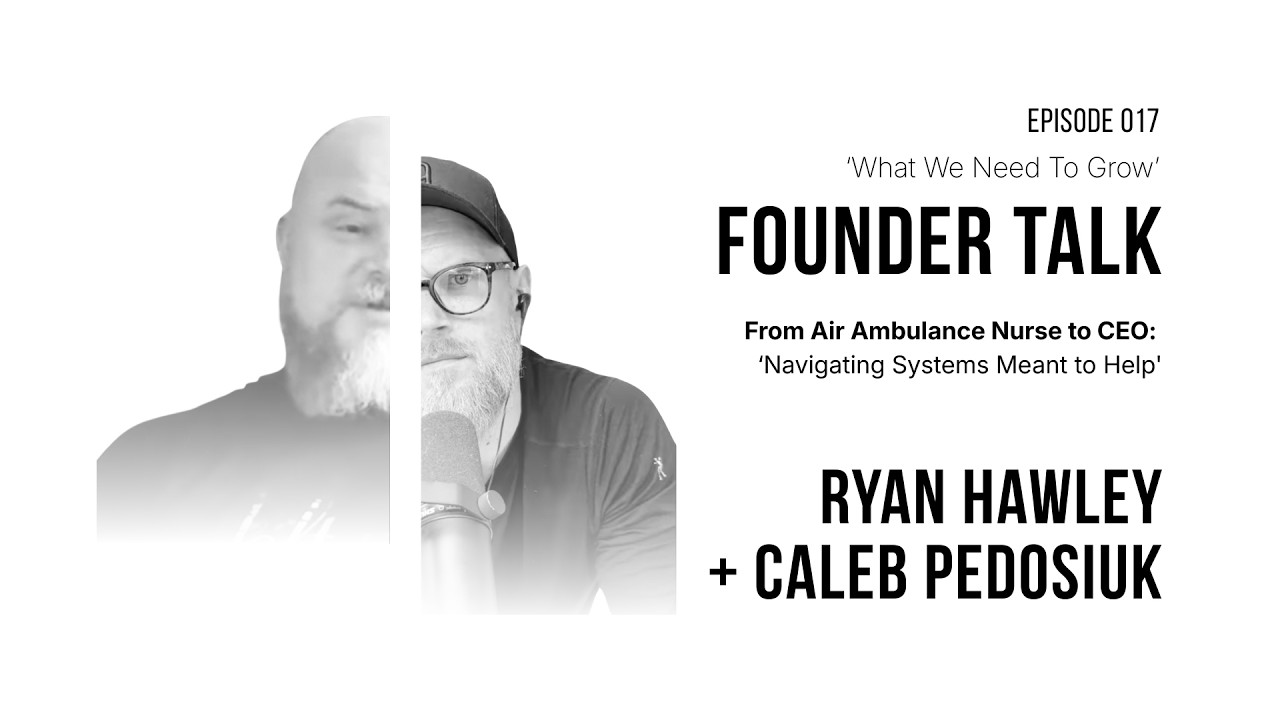
Ryan Hawley went from the emergency room to fifteen years of international air ambulance work across 143 countries, including flights into Baghdad during active conflict, before becoming CEO of Odin Industries, which handles Defense Base Act case management for the foreign nationals who work alongside the US military without ever enlisting. His account of why that system is difficult on purpose is the kind of hard-won explanation no competitor can fake and no generic content can produce. Ryan named the shift himself on the record: people now ask an AI assistant for a recommendation rather than working through search results. That is the throughline 79 Development keeps coming back to. When something is genuinely hard to understand, the business that explains it clearly is the one that gets found, recommended, and trusted.
KEY TAKEAWAYS
- The system is difficult on purpose. Ryan is blunt about why veterans struggle with the VA: the process is hard by design, and difficulty is a strategy for mitigating claims exposure. The free services that exist to help give you twenty minutes at a very large company working under a billion dollar contract. His whole differentiation is the opposite of an assembly line, spending the time to learn the detail of a veteran's service and injuries and building documentation the VA can actually act on.
- Being there changes what you build. Fifteen years of picking sick people up in other people's countries, including Baghdad during active conflict, gave him a view of the work that no adjuster gets from paperwork. "No matter what your religion, race or creed, we're a lot more alike than we are different." He calls travel the cure for xenophobia, and it is visible in a business built around people the systems were not designed for.
- He named the AI visibility gap himself. Facebook is still the fishing ground for his veteran audience and Google AdWords still returns, but Ryan's own read is that the next place to win is AI recognition, because people are asking ChatGPT or Claude for a recommendation and that is slowly replacing the search engine. That is the shift 79 Development keeps pointing at, from a founder who is living it rather than being sold it.
FULL TRANSCRIPT
What We Need to Grow, Episode 017: Navigating Systems Meant to Help. A Founder Talk conversation with Ryan Hawley, CEO of Odin Industries. Cleaned for readability; the words are the speakers' own.
Caleb Pedosiuk: Let's get into it. There are a few things I'm curious about with what you're building. It looks like you're touching different countries, you're in the healthcare space, and it's pretty important work, helping people navigate something that some people are just not cut out to navigate at a time of need. So I'd love for you to introduce yourself, share a little about what you're doing, and then let's get into it.
Ryan Hawley: Sure. I'm Ryan Hawley, I serve as the CEO of Odin Industries. We have very divergent business interests and I oversee the group of operations.
The largest company is involved in Defense Base Act nurse case management. That's any contractor working ancillary to the military in some capacity. It could be food service, it could be translators, security guards, anyone who is not actually enlisted. They're protected under a change to the Longshore Act, using very similar language, but trying to make the Longshore Act fit for foreign nationals working for a US conglomerate. It acts almost as a federal workers' compensation program for foreign nationals. So we work with almost all of the major insurers the employers use. We coordinate their medical care, gather medical records, provide field agents in locations all over the world, and then get the medical legal opinions that are used in the adjudication process. Probably 99 percent of these cases are in some process of litigation. So things like independent medical examinations, vocational assessments, and peer reviews become evidence within those arguments, or at trial if it goes that far.
In June of last year we purchased a veteran-focused medical practice that does Nexus and DBQ letters for veterans applying for benefits. That's kind of the opposite end of the spectrum. On the Odin side we're employer focused. On the Shield of Odin side we're working directly with the veterans, helping them navigate the VA. And then the third, completely unrelated business, is that we buy and flip foreclosed properties.
Caleb: How does someone come across your services? If we could go through it from the beginning, once they realize they have an issue, how would they find you?
Ryan: On the veteran side, our marketing coordinator does a lot of social media posts. The main fishing ground, I guess, is Facebook. That's the age group we're working with, and they seem to live and die on Facebook as their platform of choice. With that you get Instagram and some of the other profiles Meta owns. Other social media like TikTok is just not our core audience. We spend some money on Google AdWords and we've had some success with that. Google is still the primary search engine, but where I would like to focus next is AI recognition, because people are asking ChatGPT or Claude or whatever for suggestions, and that's slowly but surely replacing search engine capabilities. So on that side it's more direct to consumer marketing.
On the Odin Industries side, we work with almost every major insurer in the Defense Base Act space. So it's more about building relationships with the adjusters managing the actual cases, or the lawyers from the various firms doing the litigating. Those are the two parties that allocate who gets the work. Once you get on the panel for the various insurers, some of the major players being Gallagher Bassett or ESIS or Broadspire, there's no guarantee of work. It's at the adjuster level. They decide who is allocated the work. And that's a lot of shaking hands and kissing babies and taking people out to dinner and fostering those relationships so they would consider you over a competitor.
Caleb: What were the two names? One was Shield.
Ryan: Shield of Odin is the veterans-focused business. That was the name when we purchased it. It was an entity called The Doc on Wheels. We wanted to align it with the rest of the company and the Norse mythology. It's a name that helps protect veterans, and it seems to resonate. There's a Thor-ish looking Viking on the shield as the logo, and it fits the aesthetic of the rest of the brands.
Caleb: And the second one, the defense one?
Ryan: The Defense Base Act is federal legislation. Odin Industries is the company that works within that realm. And the entity all of the LLCs sit under, we call the Valhalla Group.
Caleb: You mentioned AI visibility, showing up in AI search. So on one side of things, people are talking on Facebook. They're self-selecting in a sense, they're talking about an injury or something that's going on. Is that how your team from a marketing standpoint is finding these people to help and serve?
Ryan: A lot of the veteran business becomes word of mouth. We certainly get a return on ad spend for our direct marketing campaign. But a lot of it is doing a good job to help them navigate the VA, giving them strong medical opinions based in medical literature and proven theories, and understanding the litigation that has gone on with the VA and the various rule changes, to help them come to a favourable outcome.
Our job is to help veterans who put on that uniform to serve their country, and help them navigate a purposefully difficult system. It's difficult for the average person to navigate, and it's difficult for a reason. That's a strategy to mitigate claims exposure against the VA. They make the process hard. They make the adjudication process hard. The VA does offer free services to help navigate it, and you get twenty minutes at a very large company that's under a billion dollar contract to make your case. There's not that personal touch. It's more of an assembly line than it is a white glove service.
So we're competing against entities that provide the service for free. Where we differentiate ourselves is that we'll spend the time to get to know the ins and outs of the veteran's service, what their injuries are, in detail. And we work with an absolutely amazing medical team that's able to provide documentation that aligns with what the VA needs in order to make an informed decision on whether this veteran needs benefits or not. So we feel we fill a certain niche. We're not for everybody, there are lots of people who use the free services and go from there. But for those who want a little extra care and a lot more attention to detail on their claims, and not the assembly line model, that's the niche we fill.
Caleb: Am I right that you came through this yourself? You have a nursing background.
Ryan: Yes. When I came out of university I went directly into the ER. I believe at the hospital I worked at, I was the first nurse who had gone directly from university into the emergency room. Throughout my bedside career I was always attached to emergency in some capacity, whether full time or part time or casual. Then a few years into my career I started doing international air ambulance. I've been to 143 countries. I spent most of my twenties and early thirties crammed in the back of a Learjet 35, flying all over the world bringing sick people home.
So I got sort of two-bit tourism in a lot of the world. We would only be in places for a day or two, so I couldn't see everything, I couldn't fully explore, but I could pick a landmark or an attraction I wanted to see and get these little snippets of different cultures and different parts of the world. It was a pretty cool job when you're in your twenties and thirties. I've got little ones running around now and different responsibilities, but when you're young and fearless and looking for adventure, it was a pretty cool gig.
Caleb: It's interesting that you have that lens of seeing that pain so far from home, and then seeing the return. You've physically seen that process. You're not coming at this from an insurance company dealing with paperwork. In a way you were boots on the ground, you were there to see these patients, to hear some of those stories, gather some of that in a way that is very real and tangible.
Ryan: Absolutely. And I was the employee at the various companies I worked with who never said no. So I was in and out of Iraq several times during active conflict, in a non-military Lear 35, picking up contractors in Baghdad. I hope the military takes care of their own with military air. But if you're not enlisted, it falls on the insurer to coordinate, and it falls on a nurse like me who's willing to say yes, I understand there's an active conflict going on, but somebody needs help and I'll go in and get them.
It gave me insight into most of the different cultures in the world. It gave me a perspective that no matter what your religion, race or creed, all across the world, we're a lot more alike than we are different. I think travel is the cure for racism or xenophobia. The more you see of the world, the better you understand that we're all people. It gives you a very different perspective than staying within a bubble within your own country.
Caleb: We've worked with, and do work with, a couple of brands and nonprofits in that space, and disaster response is one of them. After Hurricane Melissa hit Jamaica last year I was actually there. We were on the first flight in, got to go to the west side of the island to bring things in. That was really interesting. And specifically with veterans coming out of the States, a lot of them are behind these organizations, ex-military, retired special forces, and seeing those guys willing to go into some of these spots, whereas a lot of people are standing back, glued to the news, not even able to get past whatever's coming in from the screen.
Ryan: When I was still in Canada I served as an incident commander for the EMAT team, which is a civilian medical team modelled after the military's disaster assistance response model. So we trained a lot with the Canadian military. It started as a droplet-precaution travelling ICU, because before COVID, Toronto was hit by a mini pandemic of a virus called SARS. It was mostly contained within the metro Toronto area, which is now the third or fourth largest city in North America. I know it surpassed Chicago in population. New York and LA are still bigger.
Within the metro area there are a lot of hospitals and a lot of infrastructure. So the initial team was conceptualized to help communities outside metro Toronto, if it had gone to somewhere like Bancroft. It wasn't utilized quite a bit, so they started training us in mass casualty triage and disaster response.
We responded to the huge forest fires that were impacting reserves. I acted as the incident commander for what I believe was the greatest population migration in Canada at the time. I think twelve different tribes were impacted. On the one hand you had to coordinate to fight the fires and deal with the issue. And then you had seven or eight cities where you had 500 or 600 people at each site who needed food coordinated, who needed medical care coordinated. Some of them were coming from dry reserves into hotel facilities with a bar, so we had to mitigate some of the challenges that came along with that, put security measures in place, and find activities for the kids who had been displaced. I acted as incident commander for, I want to say, four weeks on that particular deployment before I handed it off. We also assisted with the G7 and the G20 in Toronto. To this day, even though I've left Canada and I'm no longer a member of the team, they're the point of the spear for any natural disaster impacting Ontario.
Caleb: It's so important. There were a few different places I got to go and I was amazed when you actually go through some of these disasters and see the sheer scale. In western North Carolina after Helene came through, seeing these massive mud balls where even the bulldozers were breaking. I travelled along with a welder who had a welding setup and he would go and fix the excavators, with cadaver dogs going around. Until you see it up close and see the sheer volume of it. But to see people who would go directly into it and be willing to help. I completely agree with what you mentioned about seeing humanity, neighbours caring for each other, neighbours from other countries.
Ryan: Asheville was a good picture of the American spirit. A lot of people jumped in to help. I'm not sure the government did a particularly good job of helping them, but the community itself came together, which was a very unexpected and very catastrophic outcome. Western North Carolina is not a place you anticipate would have that big a fallout from a hurricane. Eastern North Carolina, that comes with the territory. If you're going to live on the coast you're at risk of being hit by a hurricane. I was in south Florida prior and dealt with a number of hurricanes, and now we're in eastern North Carolina. At some point one is going to blow along the Outer Banks and come to us. But the west side of the state is not a place you would expect that sort of catastrophic outcome.
Caleb: Very true. Well Ryan, who specifically, if they could hear this, should raise their hand and get in touch? Is it a veteran, or not necessarily a veteran but someone who has worked adjacent to the military community and has felt they don't have the representation they need before their insurer? Who would you suggest should get in touch?
Ryan: On the Odin Industries side it would be any insurer or law firm working directly with foreign nationals in some capacity. Our primary work is Defense Base Act based, but we're increasingly getting into the foreign voluntary space, organizations that may not be working in combat zones but have employees travelling all over the world to conduct business. They need assistance with arranging physiotherapy, or arranging nursing in Spain or London or Egypt or wherever their employees are. If there are multinationals with employees travelling all over the world, we would love to have a conversation.
And then any veteran who is coming out and getting ready to navigate that process of deciding whether they qualify for benefits or not. Either myself or the nurses who work for me are happy to have a conversation and see how we can help facilitate that process.
Caleb: Well Ryan, thank you very much for your time today and for sharing some of this really important work that's being done.
Ryan: Appreciate you having me. Thanks so much.
What We Need to Grow is a conversation series by 79 Development, hosted by Caleb Pedosiuk. New episodes on YouTube and Spotify.