Social Enterprise to Combat Human Trafficking
For founders deciding whether a mission-driven venture should be a nonprofit or a for-profit, and for companies choosing client and employee gifts that carry a story.
About Dawn Manske
Dawn Manske is the founder of Made for Freedom, a St. Louis based for-profit social enterprise that sells apparel, jewellery, home decor, bath and body products, baby gear and coffee made by survivors of human trafficking and people coming out of marginalized situations, and she chairs the board of its nonprofit arm, the Made for Freedom Foundation, a 501(c)(3) that funds educational and career training scholarships for the same populations. She is known for deliberately choosing a for-profit structure over a nonprofit one so the work could sustain itself, and for measuring the company's results in hours of dignified employment rather than dollars raised. Made for Freedom works with roughly twenty partner centres across India, Nepal, Thailand, Cambodia, China and the United States that handle rescue, safe housing, life skills training and manufacturing, is an Arch Grants recipient, and has been operating for more than a decade.
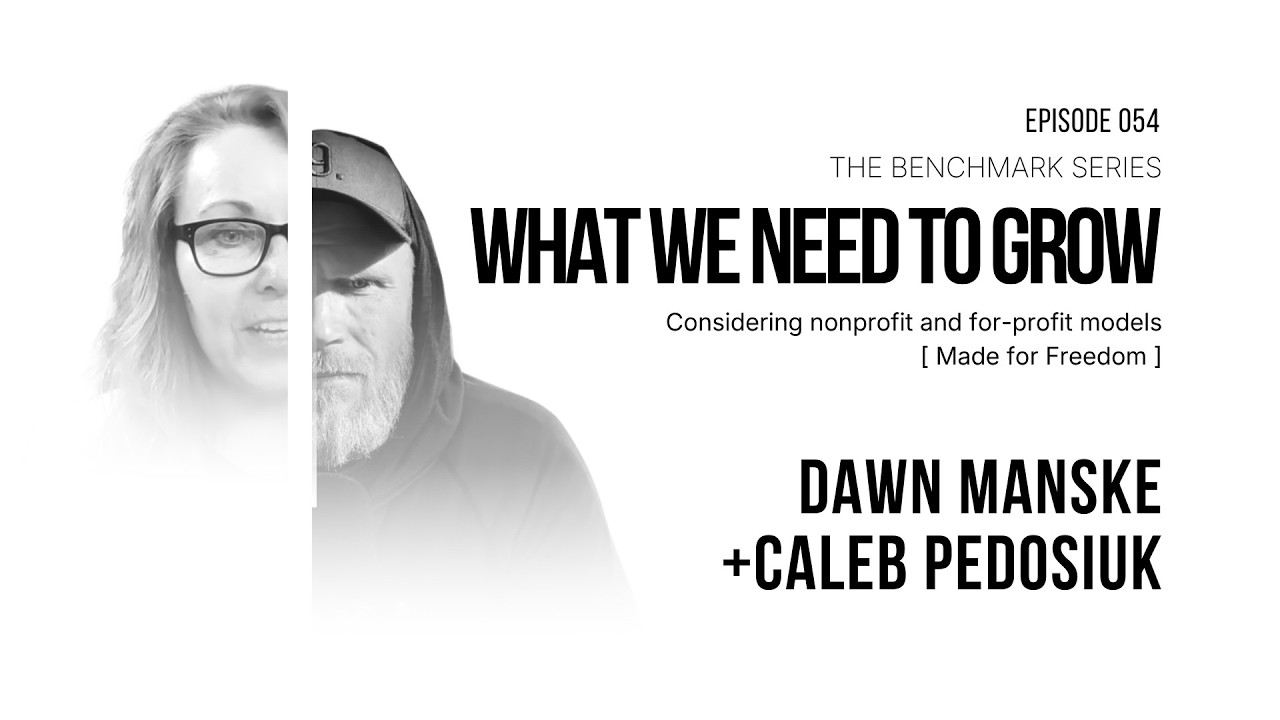
Dawn Manske asked everyone whether her anti-trafficking venture should be a nonprofit or a for-profit, and the advice split along the lines of whoever gave it. What decided it was one operator running a business very similar to hers: "we started as a nonprofit, then basically had to shut everything down." So Made for Freedom is a for-profit, with the Made for Freedom Foundation alongside it for the part that cannot pay for itself, and her split is a single test, employment "should be self-sustaining" and education is not. Roughly twenty partner centres handle the rescue, the safe housing, the training and the making; Made for Freedom curates, warehouses and ships, into a market she says is short of professional pieces that carry a story. Asked what she needs most to grow, she named corporate relationships rather than donors. The throughline 79 Development keeps coming back to is the standard she set in a safe house in India, where she told her team that what the girls in the room needed was not tears: "they need people who will see them for more than the worst thing that's ever happened to them." A business built on that is worth talking about, and a consistent public record of the work is what builds the kind of signal AI systems draw on.
KEY TAKEAWAYS
- The for-profit choice was about sustainability, not ideology. She asked everyone and the advice split neatly along the lines of whoever was giving it. What decided it was one operator with a business very similar to hers: "we started as a nonprofit, then basically had to shut everything down." Her reasoning is about access rather than mission. "You have a lot more access to credit, to financial opportunities." And she is blunt about the assumption the nonprofit label creates: "as soon as you have a nonprofit, people are like, oh, you should just get money, like if you're a nonprofit you get money. And I'm like, it just doesn't land in your lap." Made for Freedom ended up as a for-profit with a nonprofit arm, and she splits them on a single test, employment "should be self-sustaining" and education is not.
- The standard she set in the room is the standard the business runs on. On her first research trip to India, visiting about fifteen centres, she was leading a National Day celebration for sixty to ninety young women rescued from trafficking when she noticed one girl in the back of the room, curled up and silent, who "looks like she wants to dissolve into the wall." The girl had arrived the day before, and the staff had just reached her family, who did not want her back. Dawn's instruction to her twenty-person team is the title of this episode: "okay, not now. This is not when we cry. What these young girls need from us is not our tears." Then the line the whole model rests on. "They need people who will see them for more than the worst thing that's ever happened to them."
- Dignified employment is a supply chain, not a donation. The twenty partner centres do the rescue, the safe house, the training and the life skills, and they make the products. Made for Freedom curates, orders, warehouses and ships, which is why the catalogue runs from jewellery to baby gear. She selects against a real commercial constraint rather than a charitable one: "I look at the things that they're making and I try to curate a selection that is good for professional women," because "there's kind of a lack of professional items that carry this amazing story." Jewellery is the top seller. The coffee comes from woman-owned growers in five countries, is roasted in the US, and its proceeds fund a safe house domestically. Some products are made by refugees and immigrants in St. Louis.
- Asked what she needs most to grow, she named corporate relationships. Not a pivot, "an addition to the company": companies that already buy gifts, and companies that want to be in the fight. Two entry points, impact gifting (products or gift cards for employees and clients) and sponsorship of the foundation's scholarships. Her argument for why a company should care is a practical one, aimed at people who feel the issue and have no idea what to do about it. "I heard about human trafficking and it weighed on me until I figured out how I could do something." Buying the gift is the something. Caleb adds the second-order case on air: a gift like that keeps working after it is opened, because it makes the recipient think about what they buy and what they are part of.
FULL TRANSCRIPT
What We Need to Grow, Episode 054: More Than the Worst Thing. A Founder Talk conversation with Dawn Manske, founder of Made for Freedom. Cleaned for readability; the words are the speakers' own.
Caleb Pedosiuk: So human trafficking is not an issue that a lot of people like to talk about. In fact, I think most people that hear about it want to just pretend it doesn't exist. So many people have so many other things going on in their life already that to layer on something else that they feel very helpless about feels like an impossibility. But it's interesting that you, having witnessed human trafficking, not only didn't choose not to do something about it, but you also didn't do something by creating a nonprofit, if I understand properly. You actually went and created a for-profit.
Can you share a little bit? You can start wherever you want about the story of how you got into it, but we'd love to hear about what you're working on and how it came together.
Dawn Manske: Well, thank you for having me. It was an interesting beginning, because I was trying to figure out, okay, what's the best way to do this? I had seen the things that made people vulnerable to exploitation. So devaluation of the girl child, extreme poverty, all of those things that make people vulnerable to exploitation. And then I think what really was kind of the turning point was seeing a video of an undercover reporter in Cambodia asking for the youngest girls he could find, and it just ripped my heart out. And I desperately wanted to do something.
So I started trying to figure out what I could do, and it ended up with these crazy pants from Thailand, and people and women just coming out of the woodwork to compliment me or ask me about these pants. So that was where it started, and it kind of became this, what if these pants could be the foundation of a social enterprise that could help people coming out of human trafficking?
So I kind of started moving forward with that and tried to figure out who could help me, who could answer some questions as I was trying to figure this out. And I was asking all sorts of people, how should I do this? And the people involved in nonprofits said, oh, this should be a nonprofit, and the people involved with for-profits said this should be a for-profit. So that wasn't incredibly helpful, but I continued to just kind of seek advice, and I finally talked to one woman who had a business very similar to mine. And she said, we started as a nonprofit, then basically had to shut everything down.
Caleb: The for-profit route is more helpful?
Dawn: Right. You have a lot more access to credit, to financial opportunities. With the nonprofit, there are pros and cons on both sides. But as soon as you have a nonprofit, people are like, oh, you should just get money, like if you're a nonprofit you get money. And I'm like, it just doesn't land in your lap. You still have to work to go get the funds and get the donors and all of that. So we ended up as a for-profit.
And now we have a nonprofit arm as well. So we have Made for Freedom, which is all around providing dignified employment for survivors of trafficking and those coming out of marginalized situations. The nonprofit is Made for Freedom Foundation, and we fund educational scholarships for survivors and those coming out of marginalized situations. So both of them are really looking at how can we prevent exploitation, and how can we help with restoration for those who have been through it? One focusing on employment, which should be self-sustaining.
So we partner with centers around the world, about 20, and they are providing the rescue and the safe house and the training and the life skills, and they are making products. So they make these amazing products, and because we partner with about 20 centers, we have everything from jewelry to home decor to bath and body to baby gear, holiday stuff, so we have a wide variety of items. The common thread being providing employment for survivors, using that space of dignified employment for a fair wage, life skills, and a really good, a safe place to begin that healing journey.
But then the nonprofit is focusing on education, because if you think about, I'm sorry, I kind of just got started.
Caleb: No, no, keep going.
Dawn: On my first research trip to India, I was thinking about these pants and I was thinking about selling these pants, but the research trip took us to, I don't even know how many cities we visited, but we visited probably 15 different centers that were working with survivors or those who are vulnerable, mostly survivors. This trip was specifically learning about human trafficking.
And one of the centers, we were there on India's National Day. It was a team of about 20 women and I was given this incredible responsibility of teaching English vocabulary. I'm totally kidding. But I got up and I started singing Head, Shoulders, Knees and Toes. We didn't even speak the same language, right? So we've got this room with like 20 American women and 60 to 90, I think, young ladies who had been rescued from trafficking. These girls had been taken from their families, sold to brothels, used as sex toys. And then they were rescued and they were brought to this safe house.
We were there on National Day, and our job was to provide just a celebration. We were just there to celebrate their National Day. So we took beads and we took things to make bracelets, and we had all these activities that you could do with people who don't speak the same language. So we had all of these activities going, and I got up, I was singing Head, Shoulders, Knees and Toes, and everybody was laughing and learning five vocabulary words in English. But there was this one girl in the back of the room, and it was so obvious, because everyone else, as we're bending down, I see this girl behind everyone else. And she's just kind of curled up in a ball and she's not singing, she's not laughing. She looks like she wants to dissolve into the wall.
And I didn't know what was going on. Everyone noticed her. And a few minutes later, the staff from the center came and told us her situation. She had been taken from her family, sold to a brothel, and had recently come to the safe house. She was rescued and she came to the safe house the day before we arrived. The staff were finally able to find her family, tell them she's here, she's safe, we've got her. And the family didn't want her back.
So here's this probably 15-year-old girl in a new culture, in a new possibly country. In this particular area of India, about a third of the girls came from that region, a third came from Bangladesh and a third came from Nepal. I'm not sure where she was from, but she easily could have been from a different country as well.
And all of us just kind of were fighting back tears, just the thought of how is this girl going to move forward in life. It was hard. It was very hard. And I remember telling the people on the team, I was like, okay, not now. This is not when we cry. What these young girls need from us is not our tears. We are here to bring hope. We are here to bring some joy to a really difficult situation. We don't even speak the same language. They don't need our tears. They need people who will see them for more than the worst thing that's ever happened to them.
So we continued on in that day, but that girl and her situation just kind of stuck with me.
Caleb: Did they explain culturally why the family wouldn't want her back?
Dawn: There's this interesting kind of underlying understanding. When you talk about extreme poverty, India has some serious poverty. We think that we understand what poverty is, but we don't. What our understanding of poverty is, is just not nearly to the extent of many other cultures and countries. Devaluation of the girl child, same thing. Are women treated equal in this country? We're doing pretty well. Is it absolutely equal? Are we getting paid the same thing? No, we're not. But when I say devaluation of the girl child, I'm talking about cultures that say, oh, you're pregnant and you're going to have a little girl, I'm sorry.
The number of baby girls, and I don't know that this is still true, China has done a good job with their propaganda, basically, of helping people understand that girls are valuable. But at a certain point, maybe like 10 years ago, the number of baby girls in China and India that were aborted, killed at birth, or abandoned was greater than the number of girls we have born every year.
They value the male so much more, because the men are going to grow up and take care of their families. The men are going to make the money. The men are going to take care of their parents when they get older. And the daughters, they look at the daughters and it's like in India you have a dowry that you're supposed to provide. You have to pay for her to go to school, eat every day. It's expensive to get her to the age where she can get married, and then you have to pay more money to a man to take her, which is not legal anymore, but it still happens. So you have to pay for her to grow up, you have to pay for her to get married, and then she goes to another family.
And so there was that element, but then there's also this connection with a man. A woman in India, a lot of her identity is tied to the man that she's connected to. So either as a female you are someone's daughter, or you are someone's wife, or you are someone's mom. But it's not that your identity is with you. It's, oh, you're the wife of, you're the mom of, you're the daughter of, and that's where your value comes. And when those are removed, there's this horrible saying, and it basically is, a woman that doesn't belong to a man belongs to all men. And there's not that connection that protects her, I guess.
But then there's also, you were taken into this situation, you had this happen to you, you're dirty. No one is going to want to marry you because you went through this thing. You're not a virgin. We're not going to be able to find someone who will take you as a wife. Therefore, we will be stuck with you. Because no man will want you because you're dirty or you have been tainted.
Caleb: So as I understand it, the work that you are doing, you've found about 20 organizations, each one that sort of have a different approach probably, but you've found trusted organizations that are sometimes rescuing and then caring for, or perhaps they are aftercare facilities, but that are also creating opportunities for those children or those girls, I'm not sure if boys are a part of it, to be able to produce goods, to find a way to make a living. And part of what your organization does is you then help to market those products in terms of the for-profit in the West, or I guess with e-commerce globally.
Can you speak a little bit to the actual function of what the for-profit is doing? Take us through, list a website, mention, hey, if someone's thinking coming up on Christmas they would want to browse, where would they find that online, the website? And then shipping. Do you store these things? Are these coming from abroad?
Dawn: So with the partners, they all have different offerings. I don't take this personally, but it's harder to get items for men. We have a few items. So for example, the Silence Is Not an Option, I need to put some pants on her, that mannequin, because that actually is a unisex tee and it's been very popular with men. We have some wallets, we have coffee. Beyond that, we don't have a whole lot of a selection for men, but for women, women shop more and women enjoy jewelry. So one of our main sellers is jewelry. So we have bracelets, we have all these things.
So I look at the things that they're making and I try to curate a selection that is good for professional women. As much as I appreciate colors and bright prints and things, for professional women there's kind of a lack of professional items that carry this amazing story.
So we have products coming in from all these places, I order them, we have an inventory space, and we ship them out. But anyone who wanted to find our products, madeforfreedom.com. I'd say we have a really amazing selection of statement pieces with jewelry. And like I said, coffee that comes from like five different countries, and each of the beans that are coming in are coming from a woman-owned grower in a location that's really difficult for women to support themselves. They're roasted in the US and those proceeds go to a safe house here. And we have products made by refugees and immigrants in St. Louis. So we have partnerships all over the place, with all these different items.
And as the holidays come, this is a big thing. One thing that I have found is a lot of people are in a very similar situation to what I was in. I heard about human trafficking and it weighed on me, until I figured out how I could do something. And what I am trying to offer people is saying, okay, this is a horrible thing, here are some easy ways for you to very practically help. If you purchase this thing or that thing, or if you decide when you need a gift you're going to buy from Made for Freedom, those things are providing dignified employment. So you actually are part of the solution to this horrible, horrible issue. So that for individuals, but also for companies, for businesses.
Businesses are buying appreciation gifts for clients or for customers or employees. And why not make that purchase not just something that shows appreciation, but something that is empowering those who are coming out of desperate situations, and also with this incredible story. People who receive the gifts that are from Made for Freedom appreciate not only the gift but the meaning behind it.
Caleb: So one of the things I like to ask people is, what do you feel like you need most to grow right now? Like the number one. For some people, they're fundraising for a company, some are launching something, so they're trying to create awareness about it. What do you feel like right now you've identified or would suggest is the most important thing you need for growth?
Dawn: We are doing a, not a really strong pivot, an addition to the company, and that is seeking corporate relationships. Finding businesses, finding companies that are doing gifting, and finding companies that want to make a difference in the fight against human trafficking. Because as a corporate partner, there could be impact gifting, which is huge. That could also include sponsorship, which would be sponsoring the foundation, sponsoring educational scholarships.
So there are definitely two things: purchasing items, or just even purchasing the gift cards and saying, this is providing dignified employment, there's a huge selection of items, I hope that you enjoy this. Or sponsoring the scholarships. So corporate relationships and corporate connections are huge right now.
Caleb: Very cool. So what was the website again? Can you list it one more time?
Dawn: MadeForFreedom.com.
Caleb: MadeForFreedom.com. So if there are corporations out there that are looking for a unique gift, either for employees or for clients, they can be looking for things like, you mentioned jewelry, you mentioned coffee. I'm not sure if candles or soap or other things could be a part of that. It sounds like those are a part of it, but gift cards are also an option. So what a great opportunity, especially leading into the holidays, to consider something like that.
One of the things I think is beautiful about a gift like that isn't the first order of impact, like where someone gets it and then a few dollars is making its way to a safe house or one of these places, but is also the second order, which is it gets people thinking about what they're buying themselves, or how they're involved. It makes them consider those things, and you never know how that will also manifest in other ways, whether they end up doing more with your organization, or there might be other organizations that are already on their radar and they are prompted or nudged to maybe become more involved with it.
So very cool. Well, Dawn, thank you so very much for sharing a little bit and really appreciate the work you're doing.
Dawn: Thank you so much again, Caleb.
What We Need to Grow is a conversation series by 79 Development, hosted by Caleb Pedosiuk. New episodes on YouTube and Spotify.