INS
79 Development

INSIGHTS &
WORK

Case studies, frameworks, and original thinking on AI search visibility, brand authority, and what it takes for enterprise brands to win in the machine layer.

Featured Work
CASE STUDIES
07
M&A Integration · Post-Acquisition Rebrand · Enterprise Cybersecurity
EIGHTEEN ACQUISITIONS.
ONE LAUNCH WINDOW.
ZERO MARGIN FOR BRAND FAILURE.
A PE-backed enterprise cybersecurity platform. 750M+ revenue. 2,000+ employees. 18 countries. 30,000 enterprise clients. 18+ acquisitions consolidated under a single new brand identity.

Following a decade of aggressive acquisition-led growth spanning data security, infrastructure protection, managed services, and threat intelligence, a PE-backed cybersecurity company had built one of the most comprehensive portfolios in the industry under a legacy brand name that no longer reflected what the business had become. The decision to retire that name and launch a new identity was strategically sound. The execution risk was significant.

A rebrand at this scale is not a marketing project. It is an operational event. Thousands of customer-facing assets, including case studies, solution briefs, data sheets, product guides, video content, digital advertising, internal communications, and annual meeting materials, all carried the old identity. Each one was a potential inconsistency. Each inconsistency was a potential credibility gap at a moment when the company was asking its 30,000 enterprise customers to trust a name they had never heard.

The internal design team faced a capacity problem, not a capability problem. The volume of work required to execute a rebrand of this scale within a defined launch window exceeded what any in-house team could absorb without external support.

79 Development was brought in as a dedicated production extension of the internal marketing team. Working directly alongside the company's brand leads, we executed the systematic migration of thousands of digital and print assets from the legacy identity to the new brand system. Scope included case studies, solution briefs, data sheets, customer stories, guides, infographics, PowerPoint presentations, static and animated display advertising, and video editing support.

The engagement was structured for speed and precision. With more than 40 enterprise rebrands completed, 79 Development operated as a scalable output layer, absorbing production volume so the internal team could focus on brand governance, stakeholder alignment, and the strategic decisions that only they could make. Every deliverable was executed to brand specification. Nothing shipped inconsistent.

The new brand launched in November 2022 on schedule, presenting a unified identity across all customer-facing surfaces. The market saw a coherent, professionally executed rebrand, not a patchwork transition. The internal team credited external production support as a critical factor in maintaining launch integrity across a scope that would have been unmanageable within existing headcount.

For a PE-backed company at this growth stage, brand coherence at launch is not cosmetic. It directly affects how enterprise customers, channel partners, and the analyst community interpret the consolidation thesis. A fragmented launch creates doubt. A clean launch reinforces the narrative that the pieces belong together.

"The rebrand had to land as a single statement. Every asset in market had to say the same thing at the same time."
Engagement typePost-acquisition rebrand / production scale support
Asset scopeThousands of digital and print assets migrated
Markets covered18 countries
Launch outcomeOn-schedule brand launch, November 2022
Audience30,000+ enterprise clients across global markets
Client profilePE-backed enterprise cybersecurity platform
For references or to speak with a past client directly, reach us at contact@79dev.com
Brand Authority
Pre-Acquisition Positioning · Lead Generation
BRAND CLARITY DETERMINED WHO GOT ACQUIRED AND WHO DID NOT.
A technically superior product. A brand that had not kept pace with it.
A founder-led enterprise data security company had built exceptional technology. The brand did not reflect it. A rebrand and clarity of positioning changed how sophisticated acquirers saw the company.
Pre-Acquisition Brand Authority · Enterprise Data Security · Rebrand
BRAND CLARITY DETERMINED
WHO GOT ACQUIRED
AND WHO DID NOT.
A founder-led enterprise data security software company. Serving financial, government, military, and healthcare sectors. Multi-market, multi-product. A rebrand and sharpened positioning influenced how the company was perceived by the market and by acquirers.

Enterprise data security software operates in a category where technical capability is expected, not differentiated. Buyers in financial services, government, military, and enterprise healthcare evaluate with rigor. They are not looking for features alone. They are evaluating the company behind the product. Can they see who this company is? Does the brand communicate authority at the same level as the technology?

The company had the product depth. The brand had not kept pace with it. The visual identity had aged relative to the caliber of the work. Messaging was inconsistent across marketing assets. The thought leadership infrastructure was underdeveloped for a company operating at this level. The gap between what the company had built and how it appeared to the market was widening.

For a company with a sophisticated acquisition audience, this gap carries real weight. Acquirers evaluate brand equity alongside product. A company that cannot clearly articulate its authority and present a credible, coherent face to the market is a less compelling asset at the table, regardless of what the product can do.

79 Development was embedded as an extension of the internal marketing team. We began with lead generation infrastructure, building an interactive landing page that improved mid-funnel engagement and created a measurable path from awareness to conversion. In parallel, we developed a video content program spanning product showcases, brand advertising, and main stage content for the company's annual general meeting.

Recognizing that thought leadership at this level required a vehicle beyond standard content formats, we worked with the team to concept, design, and execute an industry publication: a monthly journal that aggregated category intelligence and positioned the company as an authoritative voice across its target verticals. We also supported a company-wide rebrand, migrating the full asset library including PDFs, solution briefs, data sheets, webinars, presentations, and internal materials to the updated brand system.

The engagement produced a measurable improvement in mid-funnel lead engagement and expanded the company's visible market presence across its core verticals. The thought leadership journal gave the brand a recurring, credible platform in a category where buyer decisions are driven by trust and expertise.

During the engagement, the company was acquired by one of the most significant PE-backed cybersecurity platforms in the industry, integrating its data classification capabilities into a global portfolio serving over 30,000 enterprise customers. The acquisition represented the successful completion of a strategic trajectory that brand clarity and market authority helped enable.

"The product was exceptional. The brand had to become worthy of it. When it did, the right parties took notice."
Engagement typePre-acquisition brand authority build / rebrand
Sectors servedFinancial, government, military, healthcare
Content producedVideo, AGM content, thought leadership journal, full asset rebrand
Brand impactRebrand elevated perceived authority with acquirers and enterprise buyers
OutcomeAcquired by major PE-backed cybersecurity platform
AudienceEnterprise buyers and M&A decision-makers
For references or to speak with a past client directly, reach us at contact@79dev.com
Market Expansion
Healthcare Growth · Enrollment Optimization · Senior Care
THE PROGRAM EXISTED. THE SENIORS WHO NEEDED IT COULDN'T FIND IT.
A $150M physician-led senior care organization. A discovery and conversion gap.
A clinically proven PACE program with a documented mortality advantage was under-enrolling across California. The care was there. The infrastructure to reach eligible seniors wasn't.
Healthcare Growth · Enrollment Optimization · Value-Based Senior Care
THE PROGRAM EXISTED.
THE SENIORS WHO NEEDED IT MOST
COULDN'T FIND IT.
A physician-led, mission-driven public benefit company. Providing fully integrated senior care through the PACE model. 13 programs across California. Valued at over $150M. Dual Medicare and Medicaid reimbursement. Serving the most clinically complex, low-income senior population in the state.

The Program of All-Inclusive Care for the Elderly is one of the most comprehensive care models in the US healthcare system, providing medical care, dental, physical therapy, transportation, meals, home support, and social services as a fully integrated program funded by Medicare and Medicaid. For eligible seniors, it functions as both provider and insurer, removing the coordination burden that typically falls on families and caseworkers. The outcomes data is compelling: in documented studies, PACE participants show meaningfully lower mortality rates than both comparable PACE programs and nursing home populations.

Despite this, enrollment remained below potential across the organization's neighborhood centers in California. The gap was not clinical. It was a discovery and conversion problem. Eligible seniors and their families were not finding the program through organic search or community awareness. Landing pages were not optimized to convert interest into enrollment inquiries. The paid media infrastructure was not calibrated to the hyper-local, community-specific nature of the target population. The message existed. The delivery infrastructure was not working at the precision required.

For a value-based care organization, unfilled enrollment capacity is a direct financial and mission impact. Every eligible participant not enrolled represents both unrealized revenue and undelivered care.

79 Development built and optimized the digital enrollment infrastructure across the organization's California service areas. This included connecting the digital ecosystem, developing structured lead flow, and building landing pages designed specifically to convert location-targeted senior care inquiries into enrollment actions.

We ran A/B testing across creative formats and platforms to identify the combinations that worked for the demographic, a population with specific digital behavior patterns, caregiver intermediaries, and trust-based decision processes. Social media campaigns, paid search, and precise location targeting were deployed with technical tagging in place to track return on ad spend and inform ongoing optimization. The engagement was structured as an ongoing collaboration, with weekly, monthly, and quarterly performance targets calibrated to the organization's enrollment cycle.

Enrollment velocity improved across active service areas. The digital infrastructure built during the engagement became the operational foundation for ongoing enrollment growth, with measurable improvements in lead quality and conversion rates across the organization's California footprint.

"The care was already there. The people who needed it most just couldn't find it. That's a solvable problem."
Engagement typeHealthcare enrollment growth / digital infrastructure build
SectorPACE / value-based senior care / Medicare-Medicaid
GeographyMulti-location California service areas
ApproachPaid search, social, location targeting, landing page optimization, A/B testing
OutcomeImproved enrollment velocity; infrastructure scaled with organizational growth
Organization typePhysician-led public benefit company, $150M+ valuation
For references or to speak with a past client directly, reach us at contact@79dev.com
Strategic Rebrand
Brand Architecture · Multi-Entity Build · Energy Transition
ONE THESIS. SIX ENTITIES. NO SHARED VISUAL LANGUAGE.
A private energy investment platform with a defensible thesis - that no one could see.
Six affiliated entities in the energy transition space had developed independently. We built the brand architecture that made the investment logic visible to institutional counterparties.
Brand Architecture · Multi-Entity Build · Energy Transition Investment
ONE THESIS. SIX ENTITIES.
NO SHARED VISUAL LANGUAGE.
A private investment management company focused on energy transition. Proprietary Full Spectrum Energy Investment approach spanning asset acquisition, clean energy conversion, carbon credit origination, and technology development. Multiple affiliated companies and product lines operating under a unified investment thesis.

The energy transition investment space is competing for sophisticated capital. Family offices, institutional investors, and strategic partners evaluating this category need to see a coherent thesis, not a collection of projects. When a firm's visual and communication infrastructure does not reflect the underlying strategic logic, the investment case is harder to make, regardless of how strong the fundamentals are.

This firm had developed a genuinely differentiated approach: acquiring mature oil and gas assets, managing them through end of life, and systematically transforming them into sustainable energy sources while generating environmental attributes including carbon credits. The approach extended across multiple affiliated entities, each with a distinct function within the overall strategy. Individual entities addressed technology development, methane abatement, carbon credit origination, resource transformation, liability management, ventures, and distributed energy.

The challenge was that these entities had developed independently, without a shared visual system that communicated their relationship to the parent investment strategy. A sophisticated investor looking at any single entity could not easily see how it connected to the others, or why the collection of them represented something more strategically valuable than the sum of its parts.

79 Development was engaged at the early development stage to build the brand architecture for the full platform. We began with the parent entity, establishing its visual identity as the structural foundation from which all affiliated companies would derive their own identities. Working from the existing periodic element logo concept, we developed a systematic visual language that could be consistently applied across each new entity as it launched, creating immediate brand coherence without sacrificing each company's distinct operational identity.

With the visual system in place, we built and deployed websites for the primary entities during key periods of increased investor and partner attention. Brand collateral including letterhead, email signatures, business cards, and digital assets was executed consistently across the full platform, ensuring that every touchpoint reinforced the same underlying message: this is a single, integrated investment thesis with multiple operating expressions.

The visual coherence built during this engagement gave the firm the foundation to present its investment thesis with clarity to institutional counterparties. Financial and intellectual resources continued to gather around the platform's initiatives. The brand system scaled as new entities were added to the portfolio, with each new launch requiring only the application of an existing visual logic rather than the creation of a new identity from scratch.

For an investment platform at this stage, brand architecture is infrastructure. The ability to present a visually and narratively coherent set of affiliated entities, each distinct but clearly connected, is not a cosmetic advantage. It is a prerequisite for the kind of institutional credibility that attracts serious capital and strategic partners.

"Investors need to see the thesis, not just the entities. The brand had to make the logic visible."
Engagement typeMulti-entity brand architecture / identity system build
SectorEnergy transition / private investment management / clean tech
Entities coveredParent platform + 6 affiliated operating entities
DeliverablesBrand system, websites, full collateral suite
OutcomeScalable brand architecture supporting ongoing entity expansion
AudienceInstitutional investors, family offices, strategic energy partners
For references or to speak with a past client directly, reach us at contact@79dev.com
Event Authority
Thought Leadership Amplification · Event Strategy · Web3
WORLD-CLASS SPEAKERS. A LIMITED STAGE.
The content had to travel further than the room.
A fintech organization convening globally recognized Web3 voices applied a content multiplier strategy - turning every speaker into a distribution channel and a single-day event into months of evergreen authority.
Thought Leadership Amplification · Event Content Strategy · Web3 / Fintech
WORLD-CLASS SPEAKERS.
A LIMITED STAGE.
THE CONTENT HAD TO TRAVEL FURTHER THAN THE ROOM.
A fintech organization convening global Web3 and blockchain innovators. Single flagship conference event. Downtown Toronto. Speakers including internationally recognized figures in cryptocurrency, decentralized finance, and digital economics. Operating in a category where perceived authority and reach directly determine sponsorship value and future event scale.

In the early blockchain and Web3 economy, conferences were proliferating rapidly. The ability to attract serious speakers, figures with real technical credibility and international followings, was not sufficient differentiation if the event's digital presence did not reflect that caliber. Organizers with strong programming but limited production infrastructure were consistently outperformed in perceived authority by events with better content distribution, regardless of the underlying quality of the programming.

This event had assembled a genuinely significant speaker lineup, including individuals with global audiences in the crypto and decentralized finance space. The challenge was converting a single-day, single-location event into a digital presence that matched the stature of the people on stage. A conference that exists only in the room it occupies has a ceiling on its authority. The goal was to remove that ceiling.

For an event that depends on sponsorship revenue, future speaker recruitment, and ticket sales for subsequent editions, digital authority is not ancillary. It is a direct input to the commercial model. An event that is invisible online after it ends loses the compounding value that high-quality content should generate.

79 Development deployed a content multiplier strategy that started before anyone walked through the door. In the weeks leading up to the event, speaker profiles were researched and content was pre-produced to build anticipation. Clips, previews, and tailored posts were distributed across the platforms where each speaker's audience was most active, seeding awareness before the doors opened.

On the day of the event, the team operated as a live production unit. Content was captured, edited, and published in real time. Clips went out while sessions were still unfolding. Audiences who couldn't attend weren't watching a recap. They were following a global conversation as it happened. When speakers reshared content featuring themselves, the event reached their international audiences with the implicit endorsement of participation. The reach wasn't bought. It was earned through the content.

The content multiplier approach created the perception of ubiquity. Audiences who had not attended the event encountered it across multiple platforms, through multiple speakers, in formats native to the platforms where they were already active. Long-form talks became evergreen thought leadership assets that continued generating organic engagement well beyond the event date.

The event punched significantly above its production scale in online presence. For a fintech organization in the early Web3 space, this translated into credibility that outlasted the event itself, establishing a content foundation that could support future editions, sponsorship conversations, and speaker recruitment with evidence of audience reach and engagement.

"The event was one day. The content had to work for months. Every speaker became a distribution channel."
Engagement typeEvent content strategy / authority amplification
SectorFintech / Web3 / blockchain / decentralized finance
Event locationDowntown Toronto
ApproachContent multiplier strategy, speaker-led distribution, live capture, platform-native formats
OutcomeEvergreen thought leadership content; digital presence significantly exceeding event scale
AudienceGlobal Web3 and fintech investor and builder community
For references or to speak with a past client directly, reach us at contact@79dev.com
Purpose-Driven Brand
Early-Stage Growth · Digital Health · Cognitive Rehabilitation
THE SCIENCE WAS RIGOROUS. THE PIPELINE WAS EMPTY.
A venture-backed digital health company. A clinically strong program. Zero enrollment infrastructure.
300 candidates. 100 enrolled. That pilot became the proof point the company needed to validate the product and move forward.
Early-Stage Growth · Digital Health Enrollment · Cognitive Care Technology
THE SCIENCE WAS RIGOROUS.
THE PIPELINE WAS EMPTY.
A venture-backed digital health technology company. Operating at the intersection of neuroscience, cognitive therapy, and technology. Medicare-covered program for adults experiencing mild cognitive impairment and dementia. Pre-product-market-fit stage at time of engagement. The engagement was focused on validating the product through a structured pilot enrollment program.

Early-stage digital health companies operating in the cognitive care space face a specific and compounding challenge. The target population, adults experiencing mild cognitive impairment and early dementia, requires a highly specific acquisition approach. Standard digital marketing playbooks do not translate. The audience is older, the decision often involves caregiving family members as intermediaries, trust is a primary purchase variable, and the channel mix that works for consumer applications fails almost entirely in this context.

The company had assembled a team with deep expertise in neuroscience, cognitive therapy, and clinical technology. Their program, combining assessments, interactive online therapy, and personalized care, was designed to address a population that existing healthcare infrastructure was underserving. The clinical case was strong. The go-to-market infrastructure did not yet exist.

Without a validated user base, the company could not demonstrate product-market fit. The problem was not the product. It was the pipeline.

79 Development was brought in to build the enrollment infrastructure from the ground up. We began with message architecture, working with the team to shape how the program was communicated to a population for whom clarity, reassurance, and clinical credibility were the primary conversion drivers. Landing pages were built and iteratively optimized for this specific audience.

We deployed and managed paid advertising across multiple platforms, running systematic A/B testing across creative formats, messaging angles, and audience segments to identify the combinations that reliably converted interest into enrollment. Tracking infrastructure, including tags, sequences, and attribution, was built to ensure every dollar of ad spend was traceable to outcomes. The engagement was structured around a clear enrollment target: find qualified candidates, convert them into pilot participants, and retain enough regular users to generate meaningful product validation data.

The campaign generated 300 interested candidates. 100 enrolled in the pilot program. More than 20 remained as regular users, providing the sustained engagement data required to validate the product and refine the clinical model. The goal was 100 enrolled. We hit it. That result gave the company what it needed to move forward with confidence.

"Three hundred candidates. One hundred enrolled. Twenty stayed. That's a product. Everything after that is scale."
Engagement typeEarly-stage enrollment growth / digital health go-to-market
SectorDigital health / cognitive rehabilitation / Medicare-covered care
Pilot enrollment300 candidates identified; 100 enrolled; 20+ retained as regular users
ApproachMessage architecture, landing page optimization, paid media, A/B testing, attribution
Pilot resultGoal of 100 enrollees reached; product validation data generated
AudienceAdults with mild cognitive impairment and dementia; caregiver intermediaries
For references or to speak with a past client directly, reach us at contact@79dev.com
Environmental Markets
Private Equity Backed · Brand Identity Build · Portfolio Integration · Environmental Markets · Clean Energy
MILLIONS OF ORPHANED WELLS. A $400 BILLION PROBLEM.
A brand that had to make it legible to investors, governments, and the market at the same time.
A publicly traded environmental services company at the intersection of legacy energy infrastructure and voluntary carbon markets - entering a category that was itself still being defined.
Private Equity Backed · Brand Identity Build · Portfolio Integration · Environmental Markets · Clean Energy
MILLIONS OF ORPHANED WELLS.
A $400 BILLION PROBLEM.
A BRAND THAT HAD TO MAKE IT LEGIBLE TO INVESTORS, GOVERNMENTS, AND THE MARKET AT THE SAME TIME.
A publicly traded environmental services company operating at the intersection of legacy energy infrastructure and voluntary carbon markets. Methane abatement focus. Addressing millions of orphaned oil and gas well sites across the continental United States. Leadership team with direct lineage from one of the world's largest investment banks' carbon trading operations. Operating within a broader multi-entity energy transition portfolio with private investment backing.

The orphaned well methane problem is one of the most significant and least visible environmental liabilities in North America. Millions of defunct oil and gas wellheads leak methane continuously, a greenhouse gas 25 to 84 times more potent than carbon dioxide. Federal infrastructure legislation had allocated billions specifically to address this problem, signaling government recognition of both the scale and the urgency. For a company positioned to originate high-quality domestic methane offset credits and provide the environmental services infrastructure to plug and remediate these sites, the market opportunity was substantial and the timing was defined.

The challenge was not the thesis. The challenge was communicating it. Methane abatement, carbon credit origination, and orphaned well remediation span technical, regulatory, environmental, and financial audiences simultaneously. Public market investors need a different signal than government program officers. Corporate sustainability buyers evaluating offset quality need a different signal than upstream energy stakeholders considering remediation partnerships. Building a brand that could speak credibly across all of these audiences, while also visually representing membership in a broader portfolio of energy transition companies, required foundational identity work before any of that communication could happen.

The company also needed to surface the scale of the problem in a way that was visceral and immediately legible. The numbers were compelling. The geography was massive. Making that visible was not a data problem. It was a design problem.

79 Development worked with the company over several years across multiple phases of brand development. The engagement began at the identity level, creating the logo and full visual brand system, establishing the design language that would carry through all investor communications, digital presence, and public-facing materials. This was brand construction from the ground up for a company entering a category that was itself still being defined.

With the visual foundation in place, we worked with multiple internal and external teams to execute across the brand's growing surface area. A centerpiece of this work was the development of an interactive digital asset: a mapped visualization of over 100,000 orphaned well sites across North America. This tool made the scale of the problem immediately tangible for investors, government counterparties, and media in a way that no data table or written summary could. The map was both a research asset and a credibility signal: a company that has mapped the problem at this resolution understands it at a level that competitors cannot easily replicate.

We also supported the integration of this brand into the broader portfolio of affiliated energy and clean energy companies, ensuring visual and narrative coherence across entities while preserving each company's distinct operational identity. Content strategy support ran in parallel throughout the engagement, shaping how the company communicated its thesis, its progress, and its market position across investor and public channels.

The company launched as a publicly traded entity on multiple international exchanges. The brand identity built during this engagement became the foundation for all investor-facing materials, exchange listings, corporate presentations, and public communications. The interactive well mapping tool established a level of technical and geographic credibility that reinforced the company's positioning as a category leader in domestic methane abatement.

Operating within a broader energy transition portfolio, the brand maintained visual coherence with affiliated entities while standing independently as a distinct, investable company with its own market narrative. The groundwork laid during this engagement, including identity, digital infrastructure, investor communication assets, and content, supported the company's ongoing capital markets activity and its continued pursuit of both federal and voluntary carbon credit market opportunities.

"The problem was real and the market was ready. The brand had to make both of those things visible at the same time."
Engagement typeBrand identity build / interactive digital asset / portfolio integration / content strategy
SectorEnvironmental services / methane abatement / carbon credit origination / energy transition
Market problem$400–$600B orphaned well methane emissions challenge across the continental US
Interactive assetMapped visualization of 100,000+ orphaned well sites across North America
Exchange listingsMultiple international public markets
Engagement durationMulti-year
Portfolio contextIntegrated into broader multi-entity energy transition portfolio with private investment backing
For references or to speak with a past client directly, reach us at contact@79dev.com
Thought Leadership
ARTICLES
THE MACHINE LAYER IS NOW THE FIRST IMPRESSION
Google's AI Overview now appears above paid ads and top organic results. That means brands that spent years and millions optimizing for human persuasion - great design, compelling copy, high-converting funnels - may never be seen at all. The machine reads first. Here's what that actually means for how you build brand authority in 2025.
AI Visibility · Brand Authority · AI Search
THE MACHINE LAYER IS NOW THE FIRST IMPRESSION

Your next customer will not Google you. They will ask AI.

Are you leaving being found to chance?

Google's AI Overview now appears above paid ads and top organic results. Claude is used by 70% of Fortune 100 companies and processes 25 billion API calls per month. ChatGPT has surpassed 800 million weekly active users. Perplexity, Grok, and Copilot are growing fast. These systems are actively reshaping how buyers discover, evaluate, and choose the companies they work with.

For the first time in the history of digital marketing, a machine-generated summary is the first thing a potential buyer reads, before they see your website, your ad, or your carefully crafted landing page. 93% of queries in Google's AI Mode now end without a click. You can rank number one and still be completely invisible to the buyer.

This changes everything about how brand authority works.

For two decades, brands invested in human persuasion. Great design. Compelling copy. High-converting funnels. Retargeting sequences. The entire playbook was built around the assumption that a human would see your brand and make a decision. That assumption is now outdated.

The machine reads first. It synthesizes. It recommends. And if your brand isn't part of what it reads, you don't exist in the conversation. Search is evolving from links to answers and recommendations. The question is simple: when AI is asked about your industry, product, or services, does it mention you?

WHAT THE MACHINE ACTUALLY LOOKS FOR

AI doesn't "find pages." It builds a model of the world and selects what it believes is credible. The question is no longer "do I rank?" It's "does the system understand who I am and why I'm legitimate, consistently across the internet?"

It looks for consistent entity signals across the web. It looks for structured data that confirms what a brand claims to be. It looks for authoritative content that other sources reference. It looks for clarity, not cleverness, not creativity. Clarity.

A brand that says one thing on its website, something slightly different on LinkedIn, and something else entirely in its Google Business Profile isn't being creative. It's being incoherent. And to an AI system trying to synthesize a recommendation, incoherence is disqualifying.

Brand mentions now correlate with AI citation inclusion (0.664) far more strongly than backlinks (0.218). Stop obsessing over links. Start obsessing over being talked about by the right sources, in the right way, with a consistent signal.

THE DISCOVERY INVERSION

For 25 years, the game was: make content, rank, get clicks. AI inverts this entirely. Brand consideration now happens without a site visit. Your brand reputation is being shaped inside generated answers, often before a user ever visits your site. If you're not part of that answer, you're not part of that conversation. It won't show in your analytics.

Traditional search had 10 spots on page one. AI surfaces 3 to 5 confident answers. There is no page two. Once these positions are established, new entrants face compounding disadvantage. Rankings look stable. Traffic looks stable. Revenue starts to soften. Nobody can explain why.

The real damage happens upstream. AI shortlists form without you. You don't lose clicks. You lose consideration.

THE WINDOW IS RIGHT NOW

54% of US marketers plan to implement generative engine optimization in the next 3 to 6 months, meaning they haven't started yet. That said, 56% of digital marketing leaders report already making significant AEO investment in 2025, and 94% plan to increase spend in 2026. The window is not indefinitely open. The early movers are already accumulating citation authority.

You are in a pre-competitive window. The brands that move first will compound their advantage. The ones that wait will spend years trying to catch up to a position they could have claimed today.

AI-referred visitors convert at 4.4x the rate of traditional organic search visitors, according to Semrush research. They arrive pre-qualified, with context, with intent, and closer to a purchase decision. Specific platform data shows ChatGPT referrals converting at 15.9% compared to Google organic at 1.76%. Less traffic, significantly more intent. The brands building AI visibility now are compounding an advantage that gets harder to close every month.

If you want to know how your brand appears inside AI answers, start here.

Keywords
#AIVisibility #BrandAuthority #GenerativeEngineOptimization #AISearch #AnswerEngineOptimization #ZeroClickSearch #ChatGPTVisibility #PerplexityVisibility #LLMOptimization
WHAT HAPPENS TO BRAND AUTHORITY WHEN YOU CONSOLIDATE ACQUISITIONS
Post-acquisition brand fragmentation isn't just a marketing problem - it's an AI visibility crisis. When you collapse 10 brands into one, the machine layer sees the seams.
M&A · Private Equity · Brand Consolidation
WHAT HAPPENS TO BRAND AUTHORITY WHEN YOU CONSOLIDATE ACQUISITIONS

If you're leading M&A as a Chief Strategy Officer or heading up post-merger integration, this matters.

When platforms roll up acquisitions, the focus is clear: EBITDA lift, cost synergies, revenue expansion, operational consolidation. The human layer of brand consolidation gets the most attention: the logo, the fonts, the design system, the messaging. And that work matters.

But today, the larger gatekeeper isn't just human perception. It's machine consensus.

THE STRUCTURAL PROBLEM

AI systems, search engines, and indexing models are constantly interpreting domain structure, entity relationships, language consistency, directory alignment, and authority signals. If those remain fragmented across acquisitions, the platform may look integrated to people, but it won't read as integrated to machines.

Every acquired company had its own digital footprint: its own domain authority, its own backlink profile, its own entity recognition in knowledge graphs, its own structured data, its own citations across the web. When you consolidate those brands into one, you don't transfer that authority automatically. In most cases, you destroy it.

Redirects help with some of the SEO equity. But redirects don't transfer entity recognition. They don't transfer the relationships between brands and the topics they're associated with in AI training data. They don't fix the fact that three different acquired companies were each described differently across dozens of directories, review sites, and industry publications.

If AI can't understand your new structure, it won't recommend it. LLMs cite what they can verify and trust.

THE SLOW, INVISIBLE DRIP

The most expensive damage often starts with a slow, invisible drip. In M&A, the financials may be perfect, the balance sheet clean, and the integration plan on track. What rarely appears in those early reports is brand dilution.

When acquisitions remain fragmented, with separate domains, inconsistent positioning, and disconnected authority signals, the brand's strength begins to thin. The internet reads inconsistency. AI models hesitate to recommend. Search visibility softens. Authority erodes. Buyers don't experience a dominant platform. They experience fragmentation.

Revenue doesn't collapse overnight. It leaks away gradually, through attrition, reduced visibility, and diminished trust. And by the time it's measurable in financial performance, the structural damage has already compounded.

The hidden cost doesn't show up on a balance sheet. It shows up when your competitor keeps getting mentioned and you don't.

WHAT AUTHORITY INTEGRATION LOOKS LIKE

It starts with mapping every digital touchpoint of every acquired brand before you sunset anything. It means building a structured data strategy for the new consolidated entity that accounts for the authority signals of each predecessor. It means creating a content bridge: authoritative content published under the new brand that explicitly connects it to the expertise and track record of the brands it absorbed.

This applies to organizations doing important work across every sector, from healthcare and agriculture to technology and humanitarian services. Whether you're consolidating platforms that serve patients, protect food systems, or deliver critical infrastructure, the principle is the same: if the AI is confused, the market is confused. That's a valuation leak you can't afford.

Financial integration without authority integration creates invisible drag. In a roll-up strategy, perception compounds. So does fragmentation. Most integration playbooks don't account for this. Very few platforms have an authority integration strategy. They're going to need one.

Brand integration is no longer just visual alignment. It's structural consensus. And the organizations that secure this now are answering buyer questions, earning citations, and acquiring contracts in advance by ensuring AI systems understand and trust their new structure before the market asks.

Keywords
#MergersAndAcquisitions #PrivateEquity #PlatformStrategy #EnterpriseGrowth #StrategicIntegration #AIVisibility #BrandAuthority #ChiefStrategyOfficer
AEO IS NOT SEO. STOP TREATING IT LIKE IT IS.
SEO optimizes for ranking. AEO optimizes for being cited. The signals are different, the architecture is different, and the window to move first is closing.
Answer Engine Optimization · AI Search · Strategy
AEO IS NOT SEO. STOP TREATING IT LIKE IT IS.

Every few months, someone publishes an article claiming that AEO is just the next evolution of SEO. That it's the same thing with a new name. That if you're doing SEO well, you're already doing AEO.

This is wrong, and believing it will cost you.

SEO is not dead. It is still important. Organic rankings still drive the majority of website traffic, and the technical foundations of good SEO overlap meaningfully with what AI systems need. But the way people find businesses is changing. That is where AEO and GEO come in. A brand that does SEO well but ignores AI citations is winning a game that the market is already moving on from.

TWO FUNDAMENTALLY DIFFERENT GAMES

SEO optimizes for ranking. The goal is to appear on page one of a search engine results page. The signals that matter are backlinks, keyword density, page speed, domain authority, and technical structure. Success is measured in position, traffic, and click-through rates. The unit of output is a blue link.

AEO optimizes for being cited. The goal is to be included in an AI-generated answer. The signals that matter are entity clarity, structured data consistency, topical authority, citation frequency across trusted sources, and machine-readable content architecture. Success is measured in mentions, citations, and recommendation frequency. The unit of output is a sentence that includes your brand name in someone else's answer.

These are fundamentally different objectives that require fundamentally different strategies.

THE NUMBERS PROVE IT

80% of sources cited by LLMs don't rank in Google's top 100. Only 12% of URLs cited by ChatGPT, Perplexity, and Copilot rank in Google's top 10. Traditional SEO and AI visibility are not the same game. Playing one while ignoring the other leaves revenue on the table.

A company can rank number one on Google for a high-intent keyword and still be completely absent from the AI-generated overview that now appears above that result. That's because AI doesn't look at ranking. It looks at whether your brand is a reliable, well-structured, frequently-cited entity that it can confidently recommend.

Conversely, a company with modest organic rankings can appear in AI answers consistently, because its brand signals are clear, its expertise is well-documented across multiple sources, and its structured data makes it easy for machines to understand what it does and who it serves.

WHAT AI REWARDS VS. WHAT IT IGNORES

AI rewards brand mentions and branded searches. Brand authority now outperforms link authority as a citation driver. It rewards clear, structured answers. Pages with clean headings and explicit Q&A formatting earn 2.8x more citations. It rewards third-party corroboration. AI validates claims by checking what others say about you, making earned media a core growth function.

AI largely ignores keyword density. It interprets intent, not keyword match. It ignores traditional rankings. Being number one on Google does not mean being cited in AI answers. It ignores content volume. More pages don't produce more citations. AI extracts clarity. Vague, high-volume content gets skipped. And you cannot buy your way into AI-generated answers. No sponsored AI citations exist at the response level.

THE ORGANIZATIONAL SHIFT

The biggest failure pattern: assigning AI visibility to one person and expecting different results from the same playbook. AI visibility is a brand authority system. It requires coordination across content, PR, technical, product marketing, and brand, not just one SEO team.

If your agency is telling you that your SEO strategy covers AEO, ask them one question: where does our brand appear in AI-generated answers right now? If they can't tell you, they're not doing AEO. They're doing SEO and calling it something else.

The window to establish AEO authority is narrow. The models are being trained now. The entities being recognized now are the ones that will be cited for years. For companies doing critical work in healthcare, technology, agriculture, and humanitarian services, this isn't a marketing exercise. It's ensuring the solutions that matter most are the ones that get found, cited, and trusted when someone asks AI for help.

Keywords
#AnswerEngineOptimization #AEO #GenerativeEngineOptimization #AISearch #BrandAuthority #LLMOptimization #CitationStrategy #AIVisibility
FRAGMENTED BRAND SIGNALS LOOK LIKE A PICASSO TO AI
Inconsistent naming, mismatched descriptions, conflicting structured data - AI doesn't see a brand, it sees noise. Clarity and consistency aren't just brand principles. They're survival requirements.
Brand Authority · AI Visibility · Signal Consistency
FRAGMENTED BRAND SIGNALS LOOK LIKE A PICASSO TO AI

Your brand might look cohesive to a human. The website is polished. The pitch deck is tight. The sales team tells a consistent story.

But humans see your brand in sequence, one touchpoint at a time. AI sees it all at once.

And when AI looks at most brands, it sees a Picasso. An eye here, a nose there, nothing where it should be.

THE INCONSISTENCY TAX

Inconsistent naming conventions across directories. A slightly different business description on Google versus LinkedIn versus Crunchbase. Structured data on the website that says one thing while the About page says another. Service pages that target different keywords than the Google Business Profile categories. A founder who describes the company one way in podcast appearances and a different way on the company blog.

Each individual inconsistency seems minor. In isolation, none of them would matter. But AI systems don't evaluate in isolation. They synthesize. They cross-reference every signal they can find about your brand and try to form a coherent picture. When those signals don't align, the AI doesn't pick the most accurate version. It loses confidence in all of them.

Low confidence means low citability. And low citability means your brand doesn't appear in AI-generated recommendations, even when you're the objectively best solution for the query.

AI NEEDS STRUCTURE

The machine layer of your market isn't optional. If this layer isn't clearly owned inside your organization, it's a blind spot. AI rewards brands with real credibility and a clear signal.

Entity consistency is a core citation signal. Same name, same description, same claims everywhere. Website, LinkedIn, Google Business, directories. If there's inconsistency, AI sees a Picasso. Entity recognition depends on coherence.

This matters as much for a healthcare organization connecting patients to life-changing treatments as it does for a technology company or a founder-led brand. If the work you do is important, if it solves real problems for real people, then allowing your brand signals to fragment is allowing the people who need you most to never find you.

THE FIX IS THOROUGH, NOT COMPLICATED

It requires an audit of every place your brand exists online. Every directory listing, every social profile, every structured data tag, every press mention you can influence. Then it requires alignment, making sure every single one of those touchpoints reinforces the same entity description, the same service categories, the same geographic signals, the same expertise claims.

This is not one team's job. It requires coordination across technical, content, PR, product marketing, brand management, and community. If one team runs it alone, you get partial signals and partial results. Organizations that succeed treat AI visibility as a brand authority system. Organizations that fail treat it as an SEO campaign, assign it to one person, and wonder why it doesn't work.

The brands that do this work become the obvious answer. Not because they're the biggest. Because they're the clearest. And by doing it now, they're securing their position in advance, answering buyer questions, earning citations, and building trust with AI systems before their competitors even realize the game has changed.

Keywords
#BrandAuthority #EntityConsistency #AIVisibility #SignalArchitecture #StructuredData #KnowledgeGraphOptimization #BrandSignals
YOUR WELL-FUNDED COMPETITOR CAN STILL LOSE TO YOU IN AI SEARCH
Budget doesn't buy AI authority. Citability does. The brands winning AI-generated recommendations right now aren't always the biggest - they're the clearest.
AI Visibility · Competitive Strategy · Brand Authority
YOUR WELL-FUNDED COMPETITOR CAN STILL LOSE TO YOU IN AI SEARCH

In traditional search, money was a decisive advantage. Bigger budgets meant more content, more backlinks, more ads, more retargeting. A well-funded competitor could simply outspend you into irrelevance.

AI search doesn't work that way.

THE GREAT EQUALIZER

AI systems don't evaluate brands based on marketing spend. They evaluate based on signal clarity, entity authority, and citation consistency. A brand that has spent millions on paid media but has fragmented entity signals, inconsistent structured data, and thin authoritative content can be completely invisible to AI-generated answers.

Meanwhile, a smaller brand with a fraction of the budget, but with clean entity architecture, consistent signals across every digital surface, and authoritative content that gets cited by other sources, can show up in every AI-generated recommendation in its category.

You cannot buy your way into AI-generated answers. No sponsored AI citations exist at the response level. AI recommends brands it understands and trusts. Budget doesn't buy AI authority. Citability does.

THE PRE-COMPETITIVE WINDOW

You are in a pre-competitive window right now. The numbers make this clear:

54% of US marketers plan to implement generative engine optimization within 3 to 6 months, meaning they have not acted yet. While 56% of digital marketing leaders made significant AEO investment in 2025, the field is still open. Only 16% of brands systematically track AI search performance. AI search accounts for roughly 1.08% of total referral traffic today, growing at 527% year over year. The brands establishing authority now are the ones AI will default to when that share compounds.

But this window closes. A competitor who moves first accumulates 3 to 6 months of citations and authority signals. They become one of the default names. Your catch-up cost rises. By months 7 to 12, early movers have become default citations. AI systems trust them more, cite them more, and that trust compounds. You're not competing on equal footing anymore.

WHAT MAKES A BRAND CITABLE

Three things determine whether AI cites your brand.

First, entity clarity. The AI needs to understand exactly what your company does, who it serves, and what makes it distinct. This understanding comes from structured data, consistent descriptions across platforms, and clear topical association in your content.

Second, authority signals. The AI needs evidence that other credible sources recognize your expertise. Brand mentions correlate with citation inclusion at 0.664, far stronger than backlinks at 0.218. This comes from citations in industry publications, mentions in contexts that reinforce your claimed expertise, and content that demonstrates depth rather than breadth.

Third, consistency. Every signal the AI finds about your brand needs to reinforce the same narrative. The moment signals conflict, with different descriptions on different platforms or service claims that don't match structured data, confidence drops and citations disappear.

THE PLATFORM REALITY

Research across AI platforms has found citation rate gaps as wide as 615x for the same brand between platforms. Your AI presence is not one number. It is a profile. Optimizing for only one platform leaves the others as blind spots, each with distinct citation logic, source preferences, and audience behavior.

Your well-funded competitor probably has none of this dialed in. They've been too busy spending money on human-facing marketing to notice that the machine layer has its own requirements. That's your opening. Whether you're a founder-led company doing critical work in healthcare, agriculture, or technology. The playing field has never been more level. By doing this now, you are securing contracts, earning trust, and building authority in advance.

Keywords
#AIVisibility #CompetitiveStrategy #BrandAuthority #AIMarketshare #GenerativeEngineOptimization #Citability #FounderLedBrands #AISearch
THE INVISIBLE COST OF REBRANDING WITHOUT AN AI TRANSITION PLAN
When a company rebrands, it doesn't just change its name - it erases years of entity recognition from AI systems. Most rebrand plans don't have a strategy for this. Most pay for it later.
M&A · Rebrands · AI Transition Strategy
THE INVISIBLE COST OF REBRANDING WITHOUT AN AI TRANSITION PLAN

Your merger isn't finished until the algorithms agree.

A rebrand is one of the most visible things a company can do. New name, new logo, new website, new messaging. The launch gets a press cycle. The team gets new business cards. The market sees a fresh start.

But underneath the visible rebrand, something invisible happens that most companies don't plan for: the machine layer loses track of who you are.

THE METADATA TEST

Most billion-dollar deals fail the metadata test. PR announces the merger. The board celebrates. But LLMs are still citing legacy data that is outdated. The AI is confused. And if the AI is confused, the market is confused. That's a valuation leak you can't afford.

AI systems build entity recognition over time. Every mention of your old brand name, every backlink to your old domain, every structured data tag on your old website, every directory listing, every review, every press mention: all of those signals built up a machine-readable identity. The AI learned what your company does, who it serves, and how it fits into your industry.

When you rebrand, all of that recognition is attached to a name that no longer exists. The new brand starts from zero in the machine layer. And unlike humans, who can be told about a rebrand and immediately update their understanding, AI systems need to re-learn your identity from scratch, one signal at a time.

THE AUTHORITY VACUUM

This means there is a period after every rebrand where the company is functionally invisible to AI-generated answers. The old brand still gets cited because that's what the training data knows. The new brand doesn't get cited because it hasn't built enough signal yet. And the transition period can last months or years, depending on how the rebrand was handled.

Most rebrand strategies account for 301 redirects, updated Google Business Profiles, and social media handle changes. Very few account for entity transition in the AI layer. The result is a clean rebrand on the surface and an authority vacuum underneath. The company looks new to humans and looks like a stranger to machines.

Don't launch a rebrand and hope the internet figures it out. Reduce your risk.

THE AI TRANSITION PROTOCOL

An AI transition plan treats the rebrand as an entity migration, not a cosmetic refresh. It requires:

Structured data alignment across major databases. Corporate hierarchy reinforcement to reflect new leadership and structure. Redirects, canonicals, and sitemap hygiene. Citation cleanup and high-value referrer updates.

Proactive LLM optimization: updating outdated brand data from training sets to prevent confusion during critical market transitions. Optimizing digital assets specifically for generative engine optimization, ensuring your brand is the primary source for AI-generated summaries.

Entity injection to ensure your new brand hierarchy is indexed and understood by AI search engines. We don't wait for standard crawl cycles. We audit, synchronize, and accelerate the transfer of brand authority to your new domain.

This matters for every organization doing important work. Whether your rebrand follows an acquisition in healthcare, a consolidation in technology, or a repositioning of a brand that serves critical infrastructure. The cost of getting this wrong isn't just lost traffic. It's lost trust, lost contracts, and lost time in markets where being found first determines who gets to solve the problem.

In M&A, brand isn't cosmetic. It's the signal that reassures investors, unifies teams, and proves the company can scale. By securing your AI visibility during the rebrand, not after, you are ensuring that every dollar spent on integration translates into market recognition, not just internal alignment.

Keywords
#MergersAndAcquisitions #Rebrand #AITransitionStrategy #EntityMigration #BrandAuthority #AIVisibility #PrivateEquity #GenerativeEngineOptimization
Active Platforms
CURRENT MEDIA
YouTube Spotify
EP. 006 Systems & Tariffs

The brands and businesses that endure are built by founders who understand that nothing operates in isolation - every decision, every market shift, and every policy change is a node in a larger system. This episode examines how systems thinking applies to macroeconomic forces like tariffs and to the internal structures founders build when growing a company. For leaders committed to building authority that compounds over time, understanding the system you operate inside of is not a background consideration - it is the foundation of intentional, durable strategy.

Systems Thinking Economic Strategy Trade Policy Brand Authority Founder Mindset
  • Small adjustments within a system can produce outsized, non-linear outcomes at scale.
  • Tariffs function as inputs to a global system. Their effects cascade in ways that are rarely anticipated by those implementing them.
  • Founders who think in systems are better equipped to identify leverage points and anticipate second-order consequences.
Full Transcript
Transcript coming soon. This episode covers how systems shape daily life, business operations, and large-scale economies - and why even the smallest adjustments within a system can produce significant downstream impact. Full transcript will be added via the automation pipeline.
Ep. 006 thumbnail
EP. 005 The Engine That Drives You

Sustainable growth - in a business, a brand, or a career - requires honest accounting of what is actually driving you. This episode examines the relationship between intrinsic motivation and long-term performance, asking whether the engine a founder is running on actually matches the output they are demanding from themselves. The most intentional builders are not necessarily the most relentless - they are the ones who have identified their real fuel source and aligned their work accordingly.

Motivation Founder Psychology Intrinsic Drive Sustainable Growth Intentional Leadership
  • Not all motivation is the same. The source of your drive determines how long it can sustain the output you are demanding from it.
  • Misalignment between your motivational engine and your goals creates burnout, not because of too much work, but because of the wrong fuel.
  • Founders who understand their intrinsic motivators build companies that reflect genuine values rather than external pressure.
Full Transcript
Transcript coming soon. This episode explores the nature of motivation as an engine - examining whether the drive you are operating with actually matches the demands you are placing on yourself. Full transcript will be added via the automation pipeline.
Ep. 005 thumbnail
EP. 004 Energy Is a Catalyst

Energy is not a soft concept - it is a strategic input with a measurable return on investment. This episode explores the direct correlation between the energy a founder puts into their work, their relationships, and their brand, and the quality of what comes back. The leaders and organizations that build lasting authority are not simply the most capable - they are the most intentional about what they bring to every room, every conversation, and every decision. Energy management, reframed as a business discipline, changes what growth looks like.

Energy Management Brand Authority Intentional Leadership Founder Performance ROI Thinking
  • Energy has a return on investment. What you bring into a room, a relationship, or a brand directly shapes the outcomes you receive.
  • Energy depletion in founders is often misdiagnosed as a strategy problem when it is actually a resource allocation problem.
  • Treating personal energy as a business input produces compounding returns over time.
Full Transcript
Transcript coming soon. This episode examines energy as a strategic catalyst - exploring the direct correlation between the energy we give out and what we experience in return. Full transcript will be added via the automation pipeline.
Ep. 004 thumbnail
EP. 003 Healing & the Fabric of Reality

Behind every business, every brand, and every act of meaningful innovation is a human being with a reason for doing what they do - and that reason shapes everything. This episode asks the foundational question that most founders move too fast to answer: what is the deeper purpose behind all of the building? The most durable brands are not built from market opportunity alone. They are built by people who have examined their own fabric, clarified their intent, and aligned their work with something that actually matters to them.

Purpose Intentional Building Brand Clarity Founder Wellbeing Meaning in Business
  • The purpose behind a founder's work shapes the quality and longevity of everything they build.
  • Innovation and technology are instruments. The question of what they are in service of is the more important and often unasked question.
  • The most durable brands are built by people who have examined their own intent, not just their market opportunity.
Full Transcript
Transcript coming soon. This episode explores the purpose behind the doing - asking why founders build, why we innovate, and what personal healing and wholeness have to do with creating things that genuinely matter. Full transcript will be added via the automation pipeline.
Ep. 003 thumbnail
EP. 002 Pressure + Perspective

Pressure is one of the most consistent forces in a founder's life - and what it reveals depends entirely on the perspective brought to it. This episode examines why high-stakes situations have a way of clarifying what actually matters, stripping away noise and forcing a more honest read on priorities, brand direction, and what growth is really in service of. For founders building with intention, constraint is not the opposite of progress - it is often the condition under which real clarity is produced.

Pressure Clarity Founder Resilience Intentional Growth Strategic Perspective
  • Pressure is not an obstacle to clarity. It is often the mechanism through which clarity is produced.
  • High-pressure moments reveal the difference between what founders say they value and what they actually prioritize when resources are scarce.
  • Reframing constraint as a clarifying instrument, rather than a threat, changes how leaders navigate difficulty and make decisions under pressure.
Full Transcript
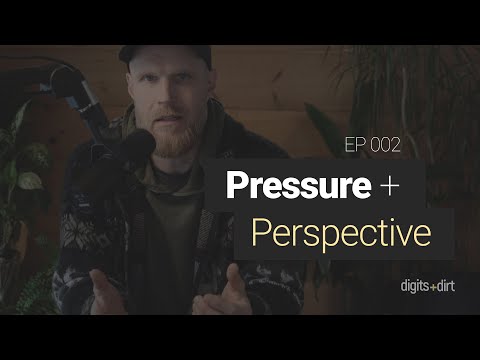
Transcript coming soon. This episode explores why pressure so often precedes perspective - and how reframing constraint as a clarifying force changes the way leaders navigate difficult moments. Full transcript will be added via the automation pipeline.
Ep. 002 thumbnail
EP. 001 The Niche Paradox

The instruction to "niche down" is one of the most repeated - and least examined - pieces of advice in modern business strategy. This debut episode challenges that assumption head-on, exploring what happens when founders choose specificity not because the market told them to, but because it reflects where their genuine authority lives. Brand clarity, it turns out, is not about narrowing for its own sake - it is about becoming the clearest, most citable version of what you actually are. That is what makes a brand legible to humans and to AI systems alike.

Positioning Brand Clarity Niche Strategy AI Visibility Founder Strategy
  • Niching down is not universally correct. The right level of specialization depends on where your genuine authority actually lives.
  • Many founders choose a niche based on what they believe the market expects rather than where their real expertise and differentiation lives.
  • Brand clarity is not about narrowing for its own sake. It is about becoming the clearest, most citable version of what you actually are.
Full Transcript
Transcript coming soon. This debut episode challenges the conventional niche-down directive - exploring when specialization expands your reach and when it limits it, and why brand clarity is really about becoming the most citable version of what you actually are. Full transcript will be added via the automation pipeline.
Ep. 001 thumbnail